Power Windows: Looking Through Window Graphics
While seemingly simple, there is a lot of technical know-how and finesse needed to properly install window graphics that last.
Earlier this decade, if you sat poolside at Las Vegas’ Vdara Hotel, you were apt to get zapped by what employees called the “Vdara Death Ray.” The desert sun reflected off the hotel’s concave windows in such a way that, at the right time of day, it was magnified and focused directly on the poolside patio. As the sun moved, the “death ray” also moved, and in its path, bare flesh got scorched, hair was singed, and plastic bags and cups melted. It could have been worse: architects had foreseen the problem and installed a window film that reduced the “solar convergence phenomenon” by 70 percent, although that turned out not to be enough. The moral of the story: don’t underestimate the power of windows—or of window graphics.
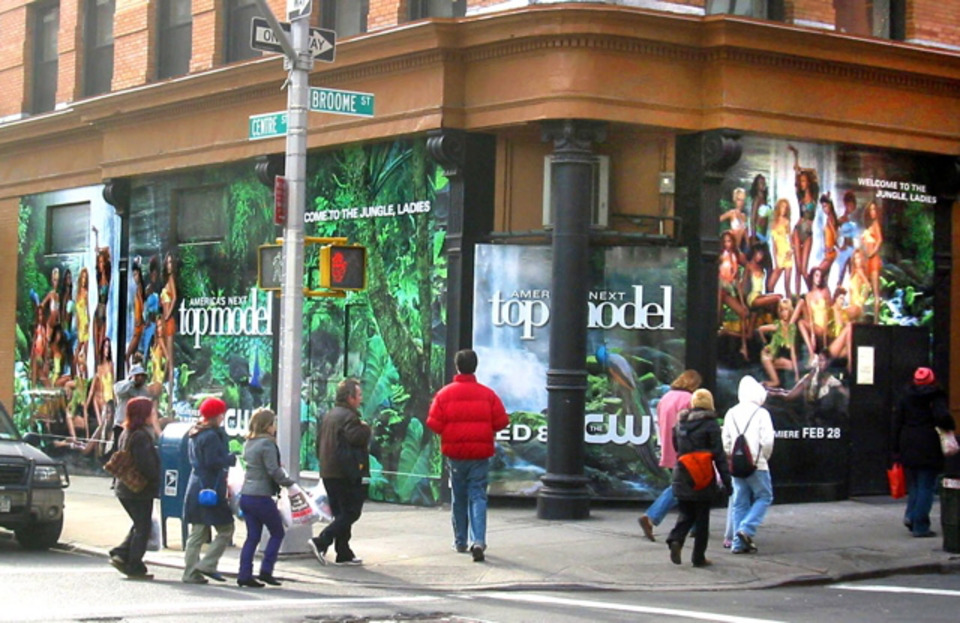
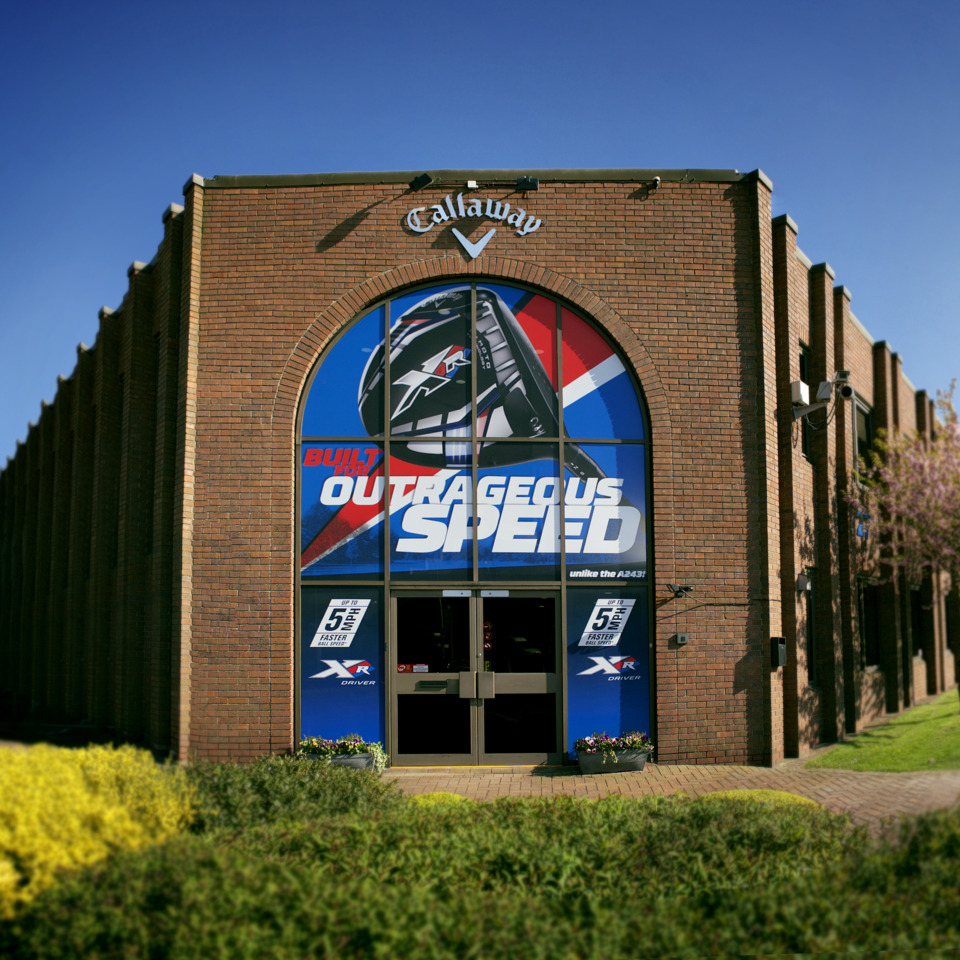
“Window graphics” range from small clings used for everything from parking passes to on-door promotions, all the way up to massive glass storefronts, as well as corporate interiors, glass doors, and vehicle window graphics. They are used for decoration, promotion, and/or privacy. They also reduce or block light—and prevent solar death rays.
The Hole Story
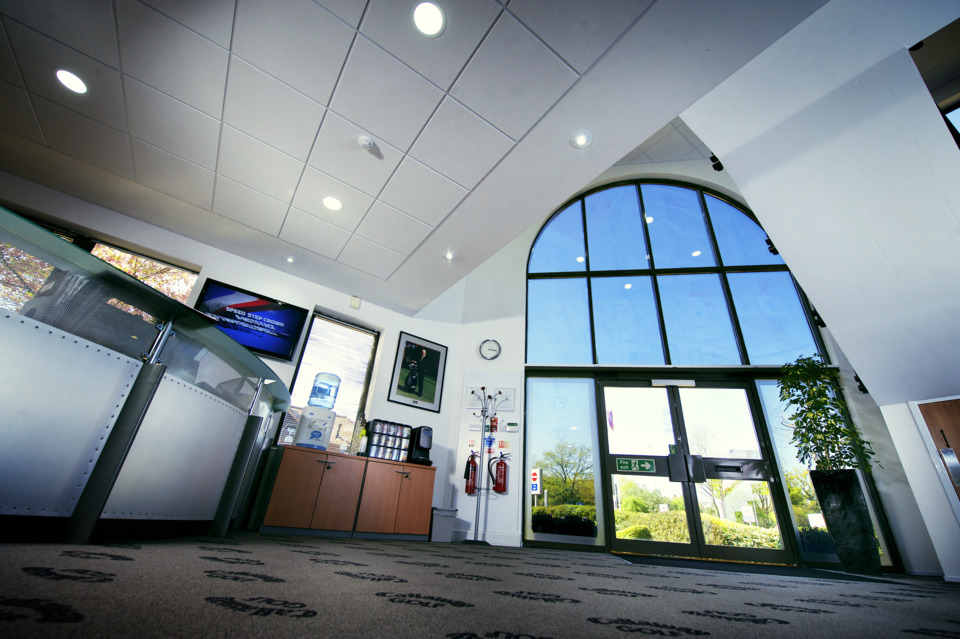
One popular form of window graphics uses perforated window film, substrates with tiny holes that allow people inside to see out, but people outside to see only the graphic. The image is printed on white film on the exterior-facing side. The interior side is black, which keeps the eye from focusing on the film, so you see through it. This can be more psychological than physical. “If you print something busy, interesting, and colorful, the eye gets distracted and it stops you looking inside the window,” said Rob Stone, Chief Operating Officer of Contra Vision North America. Contra Vision has been a pioneer in the development of perforated window films.
One of the most basic decisions when producing see-through window graphics is picking the right level of transparency, which is defined by the number of holes. A lower transparency, like 20 percent, is 20 percent holes, 80 percent material (also specified as 80/20—the first number indicates the amount of material, the second the amount of holes), which maximizes both image “pop,” and privacy. The higher the transparency, the more see-through, but the less vibrant the image.
Transparency is perhaps most important in vehicle graphics, especially bus windows. Municipalities may require a minimum transparency on bus window graphics, such as 60/40 or 50/50, so riders can see upcoming stops.
The number, and even the presence, of holes has implications for graphic design: you can’t make type or other important graphic elements so small that they disappear into the holes.
In or Out?
Window graphics include far more than perforated films. The growing trend is toward larger sizes. Even if a window is designed to have a few “spot graphics”— snowflakes for a Christmas display, e.g.—it’s easier to print white snowflakes on a large window-sized transparent film and install it as one graphic, rather than cutting out each flake.
It’s preferable, and sometimes required, to install window graphics on the outside. “If you apply it on the inside of the glass, you can get reflections off the first surface of the glass,” said Stone. “A graphic installed on the outside is always more visible.”
That may not be possible or desirable. If there’s the likelihood of theft or vandalism, it’s safer inside. If it’s on the upper floor of a building, installation may be easier from the inside. There may be local sign codes or rental rules that bar signage from being installed on a building’s exterior. If it’s on the inside, technically it’s an interior sign. (Always be aware of local sign regulations.) If you have to install on the inside, make sure the glass isn’t tinted, which will affect image color and visibility.
You Should Do Windows
It’s surprising how many people neglect to wash the window before installing a graphic. “Surface preparation is critical to the success of the window application,” said David Timmerman, Regional Technical Specialist for Avery Dennison. “Glass must be perfectly clean. Remove any tape, stickers, paint, or dirt using a single-edge razor blade scraper. Once the glass has been scraped clean of contaminates, thoroughly clean it with isopropyl alcohol.”
And never use Windex. “Don’t use Windex or ammonia-based cleaners,” added Timmerman. “These cleaners can repel [the adhesive].” Plus Windex has a blue tint which may affect the graphic.
Don’t cut corners. “The bit that’s most important to clean is the corners [of the window], because that’s where any failures tend to start,” said Stone.
It’s important to pay attention to the edges of the window. “A lot of windows have silicone caulking at the edges,” said Dennis Brunnett, Product Manager for FLEXcon. “That doesn’t take to adhesives very well, so either the adhesive will stain it, or the graphic won’t stick very well.” One solution is to not butt right up against the edge of the window. “Always leave a minimum of one-eighth-inch gap between the graphic and the rubber window seal,” advised Holly Coleman, Market Development Manager for 3M’s Commercial Solutions Division. And, she added, “don’t forget to use the edge sealer tape on perforated window film.”
Also avoid moldings. “At no time should the graphic touch or overlay any window moldings,” said Timmerman. “Loss of adhesion causing material failure can occur.”
It’s also important to understand where the graphics are going to be installed. “Know your environment, said James Halloran, Vice President of Sales and Marketing for Lintec of America. “Is it going to be strictly indoor or facing outdoor?” Lintec manufactures a full line of polyester window films designed to be printed on UV equipment. Lintec’s digital window graphics offer scratch- and UV-resistance and are used for high-end applications, such as conference room window graphics that are virtually indistinguishable from etched glass.
An outdoor-facing film mounted on a window in, say, Florida or the Southwest, receives a lot of sunlight and thus adding UV resistance can extend the life of the window graphic. Other environmental conditions can also affect the installation. “Is it going to be in a high heat area?” said Halloran. “When are you doing the installation? Is it going to be in February when it’s 20 degrees out?”
The Joy of Installation
Window graphics are installed using either a “wet” or “dry” method. In the former, liquid—often water or soapy water—is sprayed onto the application surface and the film adhesive. FLEXcon’s window graphics installation guide recommends four to six drops of Joy dishwashing detergent to one gallon of lukewarm water. “Surfactants in the dish soap make the water squeegee out more easily,” said Brunnett. However, don’t use soaps that contain lotion, cream, or fragrance.
When wet, it’s easy to slide the film around and position it properly. A squeegee removes any air bubbles. “Start the squeegee from the top and center moving out towards the edges of the graphic,” said Timmerman. “Use firm, overlapping squeegee strokes to remove the fluid and any trapped air. Any water remaining trapped between the substrate and the decal can cause graphics failure.”
Different window films have different adhesives which are compatible with different liquids. It’s always advisable to check the manufacturer’s recommendations.
Some films should not be installed wet, especially those that use emulsion adhesives, as the film may end up turning white. Avery Dennison suggests a quick test: place a strip of the film in a glass of water and leave it for 30 to 60 seconds. If it stays clear, you can use the wet method. If it turns white, mount it dry.
It’s also important to know what adhesive fluids are compatible with what films. Rapid Tac is a popular adhesive liquid for vinyl graphics, but is incompatible with non-vinyls such as Lintec’s polyester-based films. “Know your product,” said Halloran. “Rapid Tac doesn’t work very well with our adhesives. Know the compatibility of the adhesive and the liquid that goes with it.”
Any perforated window film should be installed dry. “If you apply it wet, you get a mess,” said Stone. You also don’t have to worry about air bubbles, since, well, it’s full of holes.
There is also a film that uses “air egress,” tiny channels that allow air to escape and prevent bubbles. It has its applications, but one drawback is that in some applications you can see the pattern of channels. “On a white film it almost looks like a textured wallpaper,” said Brunnett.
Film On Film
Exterior window graphics can be protected from the elements with a thin, overlaminate film. However, in some cases it may be overkill. “Putting overlaminate film just for the sake of it is sometimes unnecessary and just increases the cost of a job,” said Stone. One application where an overlaminate is required is perforated vehicle window graphics. “You’ve got dirt, rain, and sleet splashing up from the road, and if you don’t have an overlaminate, it gets in the holes and you can’t see out,” said Stone. When it rains, water can collect in the holes and cause a fishbowl effect. “People looking out can actually get motion sickness,” said Brunnett.
A Touch of Frost
Window films can also decorate or add privacy screens to interior windows, such as those looking into a conference room. Economical “frosted glass” can be created using window films. Perforated window films are also in high demand for these applications—but pay attention to lighting conditions. If you put the window film on the interior windows of a meeting room, and on the other side of the meeting room is a big wall of exterior windows, “if you’ve got light streaming in through the windows and through the perforated film, you don’t have privacy,” said Stone.
Lighting is a factor on outdoor perforated films as well. “If you use normal white-on-black perforated window film, as soon as you turn the lights on inside and it’s dark outside, you lose any privacy,” added Stone. You also lose the ability to see the graphic. This can be an issue during, say, the Christmas season when brightly lit shops are open past dark. “Light goes through the holes and you can’t see the image,” said Stone. Contra Vision recently introduced a translucent white perforated film that counters this effect so the image can be seen from the outside 24/7.
I Love the Sound of Breaking Glass
When creating graphics intended for windows in direct sunlight, there is one factor that may have a result worse than the Vdara Death Ray.
“Avoid using large areas of dark colors on glass, especially black or large areas of highly contrasting colors,” said Timmerman. “If these graphics are exposed to direct sunlight, it can cause thermal shock or stress resulting in glass breakage or cracking.” Also be careful when there are highly variable temperatures. “On hot days and cold nights, glass expansion and contraction can cause breakage,” added Brunnett.
Wizard and Glass
Successful window graphics, like any graphics, begin on the drawing board, and with a consideration of not only the graphic, but the whole environment.
“Look at the overall environment and consider customer viewing distance and angle to determine the flow of traffic and if anything obstructs the view,” said Coleman. “Similarly, consider the messaging and daypart. Also think about the positioning of the graphic, and find a balance of speaking to the passerby while letting them view the inside of the store, if desired. Don’t forget the doors; everyone looks at them whenever they go in and out.” Or, for some of us, after we walk into them.
Window graphics are a mix of appropriate design and attention to detail during installation. They are a fast-growing print application, thanks largely to improved ease-of-installation of the films. Windows have power—just ask the guests of the Vdara.