Beyond the Blue Light
Retailers and brand owners need ever-changing ways to keep customers engaged
Most shopping trips today, at least for large items, are highly planned excursions. Say you want a Blu-Ray player. Assuming you haven’t bought it online (a big assumption), you’ve at least researched all the choices and read all the online reviews, so when you head to your local retailer, you make a beeline right for the Blu-Ray player section, grab what you want, serpentine around the sales staff, and head to the checkout counter. Ideally, such a trip will take less than 10 minutes, and you can move on to your next errand. The preference today, very often, is to minimize the time spent in any given store.
“It’s become a real challenge,” said Terry Amerine, director of marketing for Durst Image Technology. “How do you entice the consumer of today and create an environment that keeps people in the store?” Many of Durst’s customers are print service providers producing retail graphics for brandowners, and Durst had hosted a “Retail Trends 2020” event at last fall’s SGIA Expo.
This is not necessarily a new concern; keeping customers in retail locations as long as possible has been the goal of retailers and brand owners since…well, since the advent of retail. The only thing that’s changed is the technology. “Hanging a banner over an endcap that says ‘SALE’ is no longer viable,” said Steve Bennett, VP of Sales for Esko. “You need something compelling.” Esko has a number of software (ArtiosCAD, Studio, e.g.) and hardware (Kongsberg cutting tables, e.g.) tools for creating packaging as well as retail and POP graphics.
People who grew up in the 1970s and 80s likely remember Kmart’s “Blue Light Special”: a flashing light and siren would draw shoppers to 15-minute in-store sales. (Introduced in 1965, “Blue Light Specials” were discontinued in 1991, but Fortune reports that the troubled retailer is reintroducing them to lure nostalgic “retro” shoppers; fortune.com/2015/11/02/kmart-bluelight-special/.) Today’s in-store retail graphics and other promotional materials are based on the same premise as the old blue lights, but with new tricks.
Hello, Yellow Brick Road
When we speak about “retail trends,” we’re talking about two camps: the retail locations and their specific display needs, as well as the brand owners whose wares are sold in the retail locations. Both camps wrestle with the same challenges of attracting, enticing, and engaging on-the-go customers. As a result, retailers, brand owners, and their print service providers need to constantly innovate.
“They’re always looking for innovation and something new, whether it be a new material or a new look,” said Amerine. “They’re always trying to create something at the store level that’s going to excite and engage the consumer.”
Amerine cited the example of an electronics store in Brooklyn that was having trouble getting shoppers to its high-end product department in the back of the store. People would run in, grab what they had come for, and then check out. The solution, the store found, was floor graphics. “They created this pathway through the store with G-Floor [stylized garage flooring material] and it was stimulating enough that people felt compelled to follow it to the back of the store,” he said. “It had a huge impact on their sales.” Follow the Yellow Brick Road indeed. “That’s the challenge that retailers are going to be looking at the print community to help them solve.”
And that’s one form of the innovation that’s required to be a player in today’s retail environment, to be able to, as a print services provider, get the business of brand owners who create and deploy the majority of retail graphics.
“Our most successful customers are willing to do whatever they can to win that work,” said Becky McConnell, Associate Product Marketing Manager at Fujifilm Graphic Systems. “They are willing to be flexible and think outside the box because they would like a chance to have that long-term business. They accommodate whatever needs are thrown their way.” Fujifilm’s Acuity line of flatbed UV wide-format presses are well-suited for producing retail and POP graphics.
Material Witnesses
Using new materials is also part of the innovation process. “There’s a textile revolution going on,” said Bennett. “It prints well, it’s bright, all of the cutters can cut it now, and you can change image frequently.”
“Textiles are growing as far as POP goes,” said McConnell. “Especially soft signage.”
The use of textiles and environmentally friendly fabrics also addresses one of the other major retail trends: sustainability.
“You have to have some type of meaningful sustainability strategy because the consumers are becoming more and more aware, when making their buying decisions, of companies that they feel are acting in socially responsible ways,” said Amerine. This goes hand-in-hand with the idea of innovation. “If you can come in with innovative ideas that are also more sustainable or have a lower impact on the environment, you’re definitely going to get the attention of retailers,” he said.
This is not to say that customers are going to pay extra for a sustainable option; it’s simply expected, in the same way that customers are not likely to pay extra for, say, color management. “They rarely say, ‘Yes, bring it on, we’re definitely looking to pay more for sustainable options,’” said Amerine. But, he added, “the cost may be more expensive for fabric, but you can show them where the cost savings are. It’s cheaper to ship and they save money on freight—and it has a smaller carbon footprint.”
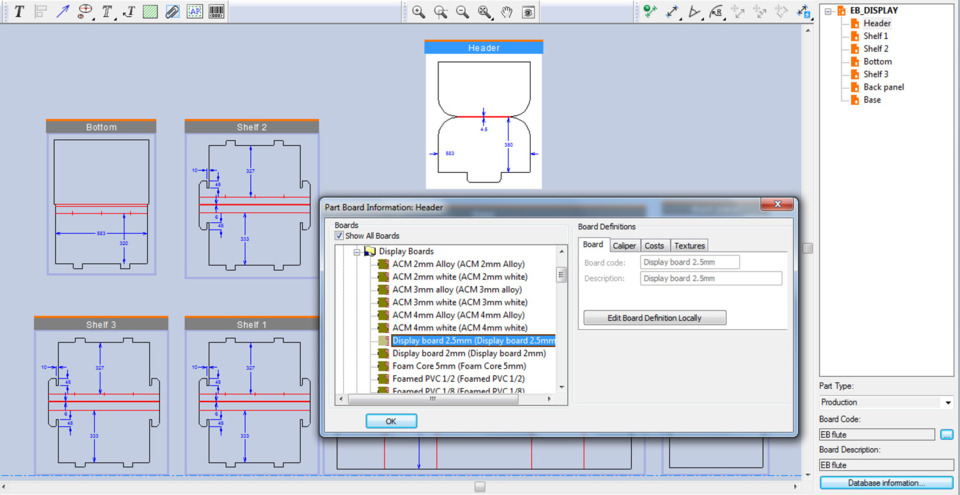
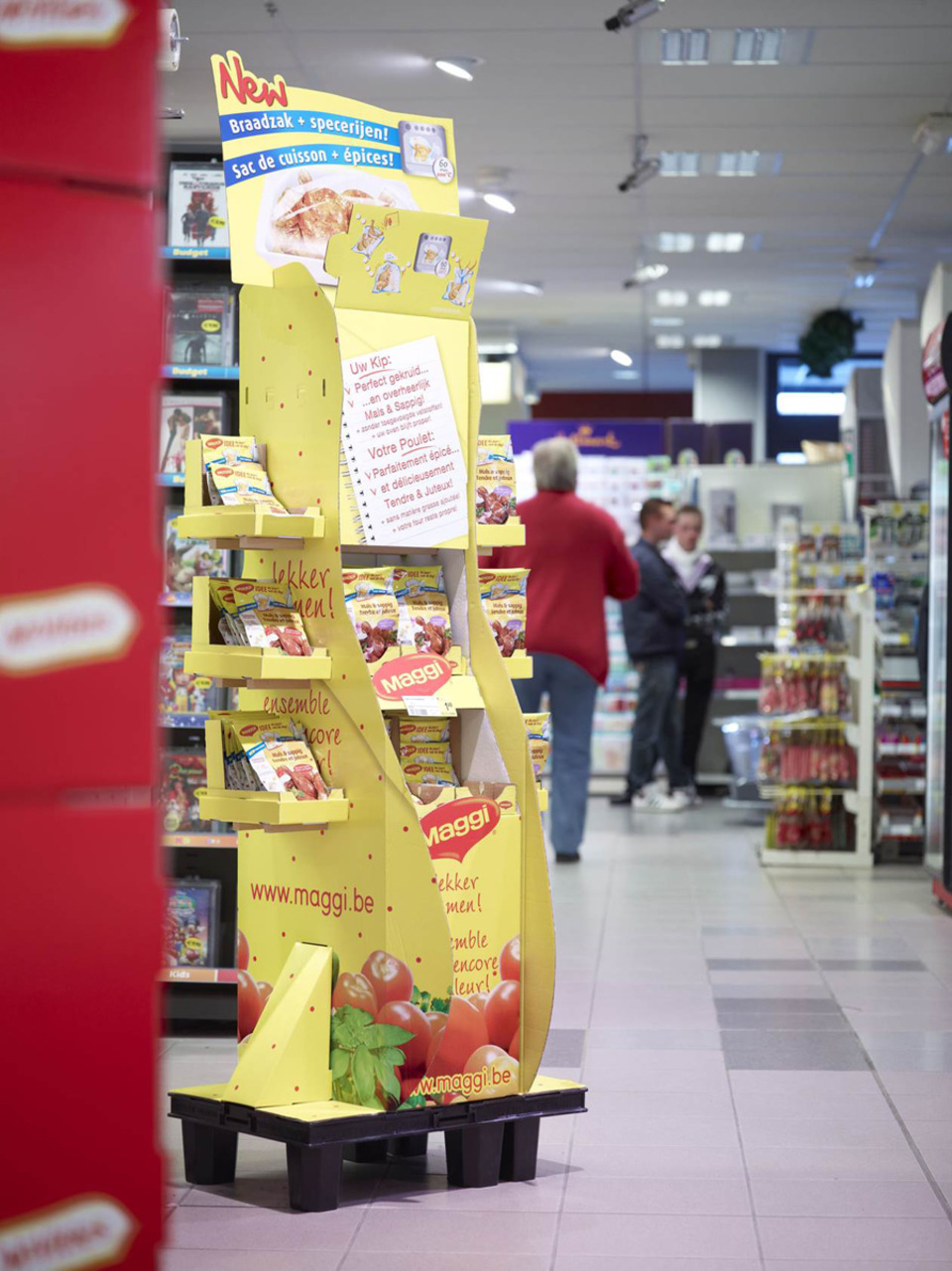
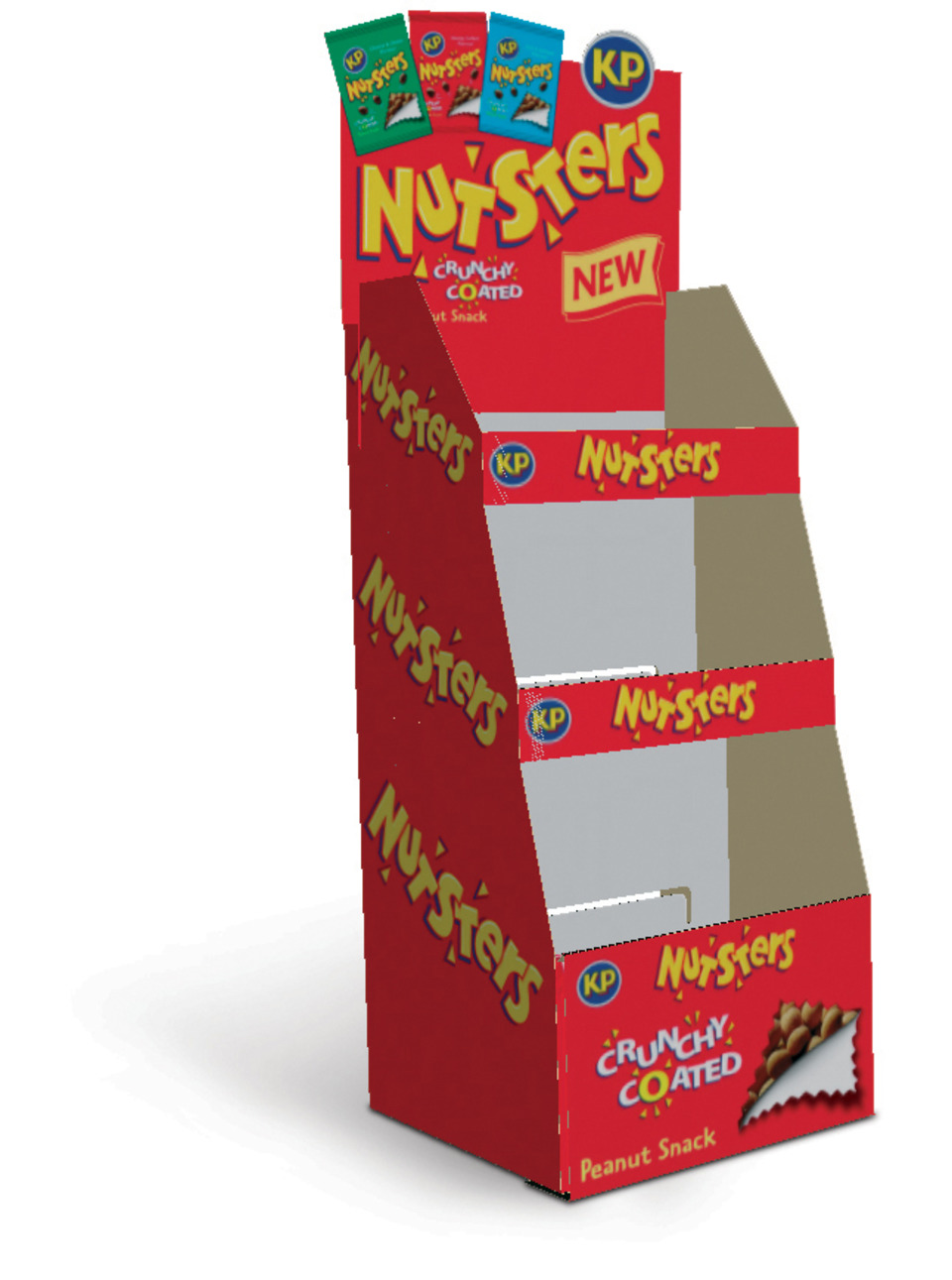
Another way that retail displays are becoming more innovative is how they are adding dimensionality—rather than simple flat signs, retail graphics are more and more elaborate constructions that require almost as much, if not more, structural design and engineering than printing. Some retail displays incorporate some kind of motion, such as a waving hand or a dog wagging its tail, while others are more functional by incorporating refrigeration units that keep water or soda cold or mirrors that allow customers to try different types of cosmetics, and so on.
Proto Zones
Given the innovation that today’s retail displays demand, “protoyping” has become a significant part of the bidding process for printers hoping to get retail work, at least for major brands. This means that rather than just quoting a cost based on deliverables, printers have to design and build a physical prototype of the display they intend to produce, and this is how competitive bids are evaluated. (More and more, digitally produced “virtual” prototypes are being accepted and, in some cases, even preferred.) The wrinkle here is that the prototypes are produced at the printers’ own expense—and if they don’t get the job, they have to eat the cost. “brand owners expect the printer to bear the cost of prototyping as a cost of doing business,” said Amerine. “They say, ‘If you’re going to pursue my business, you’re going to have to invest in prototypes that will never see the light of day.’ How do you build that cost into your cost structure?” That becomes one of the challenges that companies who hope to work with major brands will likely have to contend with.
Some Assembly Required
One downside of this innovation is that some displays can be complicated to assemble. While the most committed brand owners, especially those who can afford it, hire professional installers to erect retail displays, more often than not display kits are sent to a retail location and it’s up to the store’s staff to assemble it. And sometimes, well, that doesn’t quite happen. “An untalked about problem is that when you ship displays to different retailers, a large part of them are never assembled,” said Bennett. “They’re thrown out by the retail clerks because they couldn’t figure out how to erect them.” It’s hard to get good non-anecdotal data on how common a problem this is but some sources estimate that as much as 50% of retail displays are tossed and thus never seen by customers. That seems a bit high, but regardless, any premature disposal of retail displays is not just a waste of materials, it will also depress the sales the display was meant to drive. So usability and ease-of-assembly need to be of prime concern.
One solution to this is also another area of innovation, and another unique substrate.
“A lot of our customers are moving to magnetic materials,” said Kazu Kudo, Associate Marketing Manager, Workflow Solutions & Wide Format Media, for Fujifilm. “They’re purchasing digital magnetics and their end users are printing on them for coffee shops and retail locations. They can change messages daily, or use five or six different layers.” At the outset, the location may need someone to come in and do the initial installation, but after that, said Kudo, “it’s easier for people who work there to change it.”
Location Location Location
One major retail trend that isn’t necessarily new but plays well with digital printing is localization, and customized displays tailored to individual geographies.
A retail chain may have 4,000 locations, “but they don’t want 4,000 of the same display,” said Bennett. “It’s more like 10 versions of 400. The run length for one particular design is very low.”
Displays for the same product or brand can be different whether you are in the Northeast or the Southwest—or even in different parts of the same city with different demographics. So the models, for example, that may feature in a retail display in shops on the South Side of Chicago will be different than those on the North Side.
You’ve Got to Be Kitting
There is the tendency to lump all retailers into the same category, but there are differences worth paying attention to. There are big, national or international brands and retain chains, but there are also smaller brands and more local or regional retail chains. There are also small “mom and pop” businesses. Generally, they all have the same goals.
“The biggest difference is the scale,” said Amerine. “Dealing with a retailer with 100 locations rather than 15,000 is very different in terms of fulfillment, especially if you’re kitting for that customer. It’s not quite as demanding.”
“There may be a smaller PSP who can answer brand owners’ needs from a short-run digital standpoint,” said McConnell. “When we get into the nationwide chains, that calls for more high-production equipment. The demands are fairly similar, but they need a greater ability to fulfill the quantities that they’re looking for.”
Regardless of the type of brand owner or retailer you are trying to target, there are opportunities.
“The water is still fine, so jump in,” said Bennett. “The margins are still good. [Retail graphics] are digitizing rapidly, and there’s plenty of room for others to come in and consider it.”