How'd They Print That? Too Hot to Handle
How design firm Plural made its biz cards singularly 'cool.'
There are a few things that stand out in my early-adolescence memories during the 1990s, but I'll only mention the one relevant to this column. Hypercolor t-shirts are the hi-def equivalent of a tie-dye shirt that switches between two colors: one, the color of the fabric and the other, the color of a thermochromic dye. The latter, as its name implies, would change—actually, lose—its color when heat was applied to it, revealing the color of the fabric. To a 13-year-old, this was awesome. Except when a cute girl approached you, that is, and the typical fluster would turn the colors of the shirt faster than you could pop a pimple. In print, this effect is achieved by applying a thermochromic coating to any surface that will take it, from magazine advertisements to beer labels that let you know when the beer has gone from icy cold to warm.
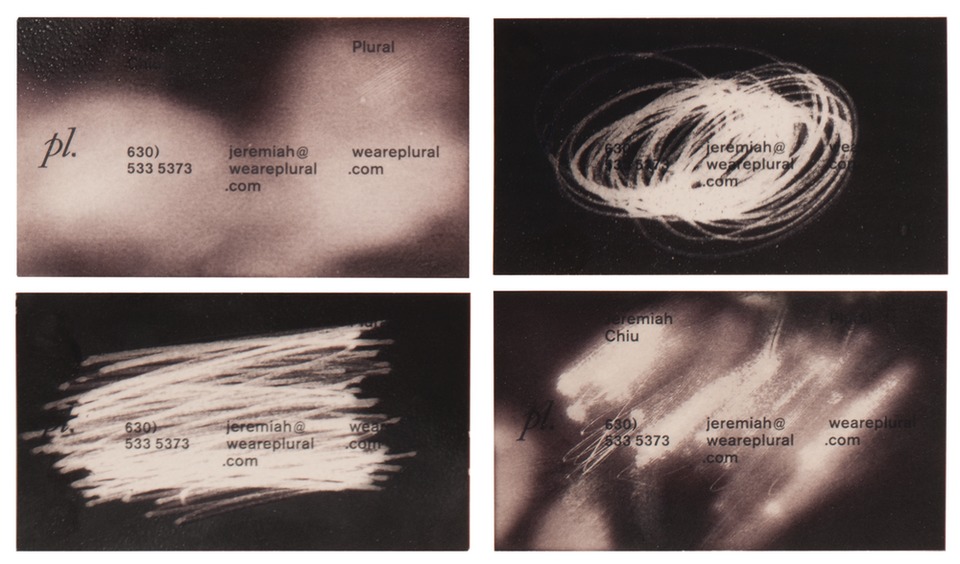
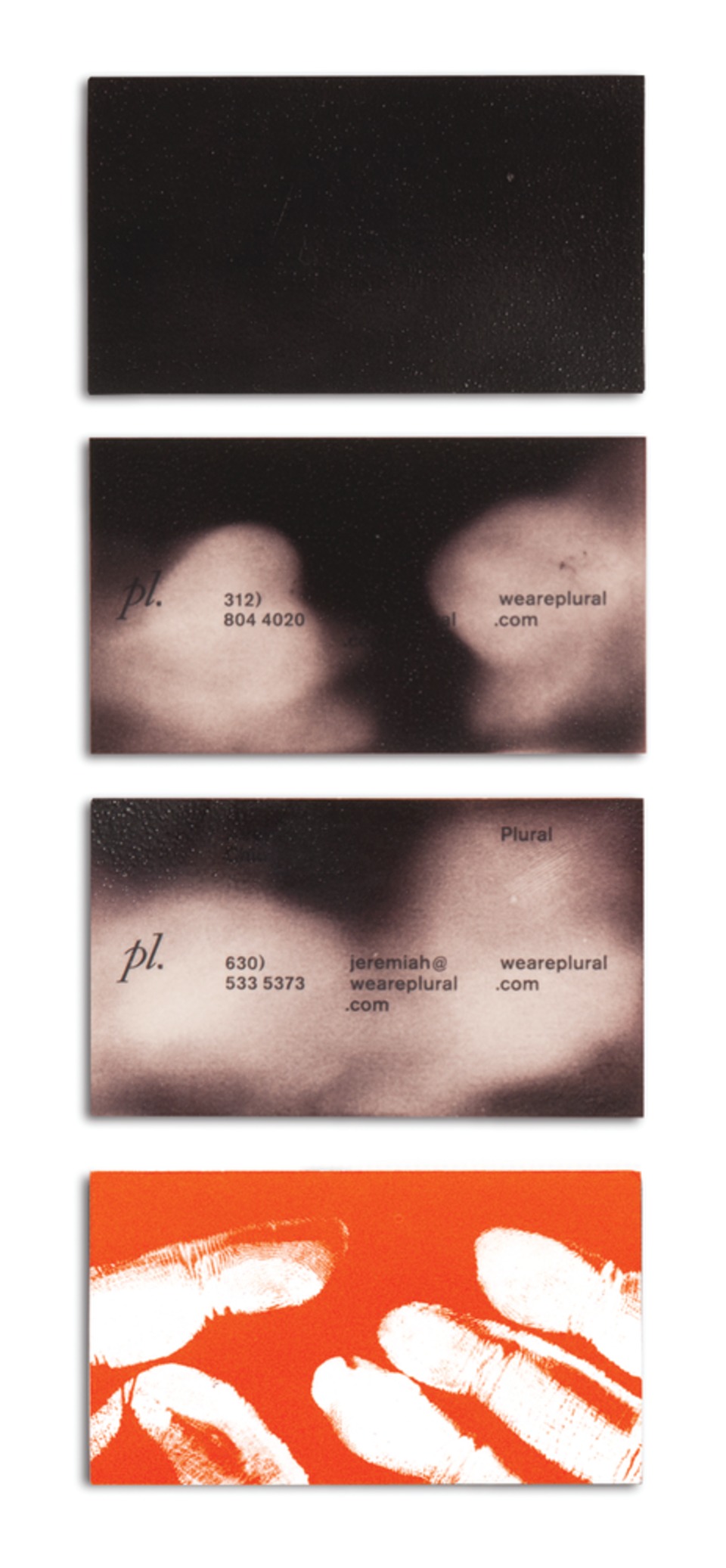
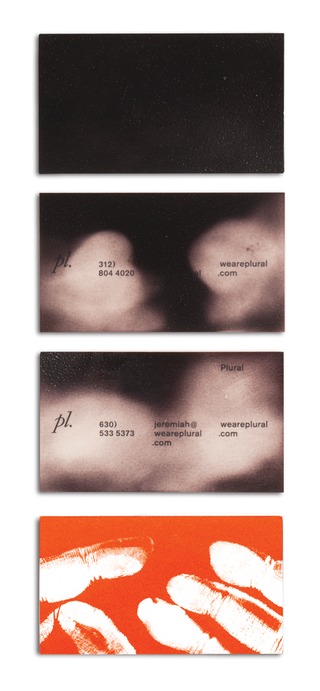
Inspired by these kinds of previous uses and looking to create a business card that would say something about the experience of working with them, Jeremiah Chiu and Renata Graw of Chicago-based graphic design firm Plural opted to pursue thermochromic printing. As opposed to other designers' business card that try to out-emboss, out-letterpress, or out-gimmick the rest, Plural thought it would be interesting to have a card that was completely blank, demanding an added level of interaction from the person receiving it. At first glance, the card is pitch black and, unless you just had your hands in an oven, it takes a minute or two to realize that your fingers are revealing the contact information. For those baffled at a blank business card, the back offers a visual cue: a realistic image of fingers, indicating that further touching is needed.
Arriving at this wasn't straightforward, though, and Plural just had the idea, not the means. They turned to Broadview, IL-based Classic Color, an award-winning printer that, according to Chiu, has never told him "No, we can't do that." Without prior experience in thermochromic printing, Classic Color took the job as a research and development project, determined to figure it out and add it to their growing list of 'can-do' items. Classic Color sourced the thermochromic coating from Henkel, a large multinational corporation that, among other businesses, specializes in what it calls Adhesive Solutions for Graphic Arts.
From there, it was a balancing act to find the sweet spot where the coating was dark enough to cover the information underneath it but not so dark that it required a blowtorch to activate. To make the process easier (or perhaps just more complicated), Henkel can prepare the coating to the desired temperature at which it should change. For Plural's business card, the temperature was set at 88 degrees Fahrenheit, slightly under body temperature.
Printed on Domtar Cougar, Smooth, 100-lb. Cover, the paper is porous and absorbent which, coupled with the need for a very opaque coating, required the use of a 70-BCM (billion cubic micron) anilox roller used on the six-color, 40-inch Komori Lithrone S40 sheetfed press. In contrast to a typical 10-BCM anilox roller, this one delivers seven times more coating. Even then, the cards required two hits on the offset press. Also receiving two hits was the fluorescent spot color on the back of the card.
Plural's business cards have proven quite popular and have been very well received by their contacts, even those in blustery Chicago, who have to work extra hard to activate that thermochromic ink in the 30-degree weather that's just around the corner.