Achieving Web-to-Print Success
The latest web-to-print technologies are helping print providers propel their businesses to new levels.

The web-to-print marketplace is helping revolutionize the printing industry. And it's doing so at a time when print service providers (PSPs) need that revolution to help take them into areas beyond printing. Via web-to-print, they’re able to diversify their product offerings to customers, transitioning from printing into areas from apparel to wall coverings to scratchcards and promotional items – and indeed almost anything their customers need to grow their brands.
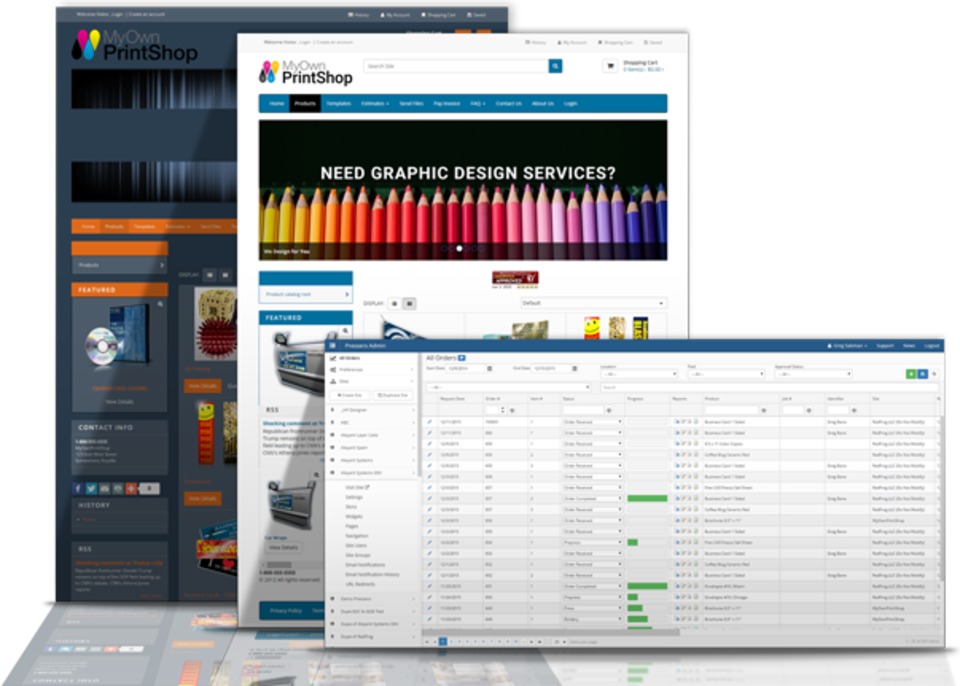
Web-to-print is also making it easy for PSPs to offer portals that allow for quicker, simpler and more convenient ordering of all those products by their customers.
To take full advantage of web-to-print, PSPs must approach their businesses differently than they have in the past. They need to become marketing partners with their clients, grow conversant in both traditional and social marketing, and explore niches and specialty areas that can help make them heroes to their customers. Here, we’ll turn to the experts to explain how best to leverage web-to-print's evolution for greater sales and profits.
Leading trends
PSPs are rolling along with web-to-print technologies' leading trends to propel their businesses to new levels, says Joseph Lehn, director of product management for Presswise by SmartSoft, the provider of workflow-management software.
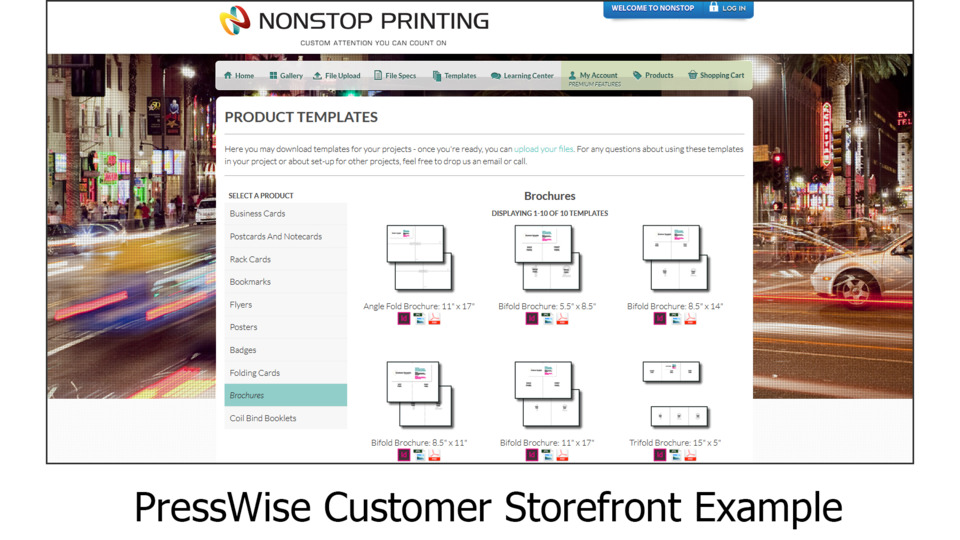
“For example, there is great opportunity in the corporate marketing space for printers to develop portals for key clients, containing catalogs of frequently ordered items [and providing] access to their complete order history to make it easy to order and reorder materials.
According to Dwight Kelly, chief technology officer and CEO for Apago, Inc., the key trends in web-to-print include workflow automation, variable data, shorter runs, and expanded offerings that include integrated mailing services.
Workflow automation allows “hands-off, lights-out automation,” making it easy to scale a business because fewer employees need be involved, says Kelly, who a quarter century ago launched his software development and consulting firm focused on graphic-arts products.
Variable data and shorter runs are another increasingly important development. “One thing they've been doing on the back end, which the customer doesn't see but the PSP does, is advance batching, so you can get discounts from the post office,” he says.
“If you are about to crank up your press, it's good to have a long run of output with the same paper stock and same finishing options like UV coating, and if you're mailing the same mail class. Your workflow automation system can do that automatically, batching together like jobs and sending them to the press. In the web-to-print market space, print providers can offer as an additional service assembling the mailing list. Companies like Postcard Mania let you choose templates, customize the templates, and start building a mailing list based on demographic characteristics. And Postcard Mania will give you costs and counts and then handle all that for you, doing all the printing and mailing, as well as the analytics.”
When asked about the leading trends in the web-to-print marketplace, sales manager Steve Ciesemier of web-to-print software provider Aleyant was concise: “Cloud-based, mobile, HTML5, automated workflow, and in that regard easy integrations with third-party software systems” are all important trends, he says.
“If you want your print shop to be more profitable and efficient, with fewer touches, you want information and files to flow from one area to the next as effortlessly as possible.”
Diversifying offerings
Expanding service offerings beyond print is growing more essential for many PSPs, Kelly says. Becoming a marketing partner, incorporating both traditional and social marketing, and in general understanding data-driven areas of opportunity are keys to grasping that opportunity. Increasingly, PSPs need to be able to provide quantitative, data-driven evidence of the value they're delivering to their large customers. Web-to-print can help provide that.
Some of the most successful PressWise customers seeking greater diversification have focused on a defined niche or product, and leveraged that focus to build their online business, Lehn says. One customer zeroed in on wide-format templates, creating a range of products easily customizable for different types of signage and display items. “Another has focused on a specific product – customizable scratchcards – and created a strong visual identity to build a powerful brand that helped grow the business significantly,” he adds.
Web-to-print is a component of a larger ecosystem that incorporates workflows, producers, production devices, and supply chain methodologies.
So says Rick Aberle, president and founder of Propago, the software company that primarily targets commercial printers who offer marketing portal systems to their marketing customers. “Printers typically have this job mentality, but to the end user that's simply an order,” he observes.
“We put a lot of emphasis on the front-end, user-facing portal where the user submits an order, as well as the back-end where everything is created. From the front end, the customer doesn't care about anything other than a really fast way to get his request in for business cards or brand materials, for instance.”
Aberle urges PSPs to branch out to other products beyond print, offering their customers access to apparel, logo-emblazoned stress balls or any other item printed with their customer's name and brand. “Even if it's completely outsourced, it's not hard for a producer to do that if they forge partnerships,” he says.
“Instead of trying to go out and get and serve a hundred clients, focus on your top 10. Really expand your reach within your best customers' wallets. Being flexible and being a champion for your client is key, because long-term they will bring you into the loop on everything. Figure out a way to offer fulfillment items through partnerships.”
But serving a wide array of customers with a broad variety of products doesn't require outsourcing.
Ciesemier reminds us of this with one example about the changing print market: “We had one customer come up to us at a trade show, and the shirt he was wearing, the wrap on the vehicle he drove, and the business card he handed us were all items he himself had printed,” he recalls. “Today, when PSPs are looking for new customers, they don't have to print on just one type of substrate. It's really about print, not about substrates. Forget about the substrates. That will limit the potential markets you can serve.”
Becoming more relevant to your customers
Among the many new products and services that can be offered through the web-to-print model are mailing campaigns and full marketing program management.
“More and more customers want to customize their mailing pieces, and that's not just addressing, it's changing text and images and offering coupons,” Kelly says. “That can all be done through variable data.”
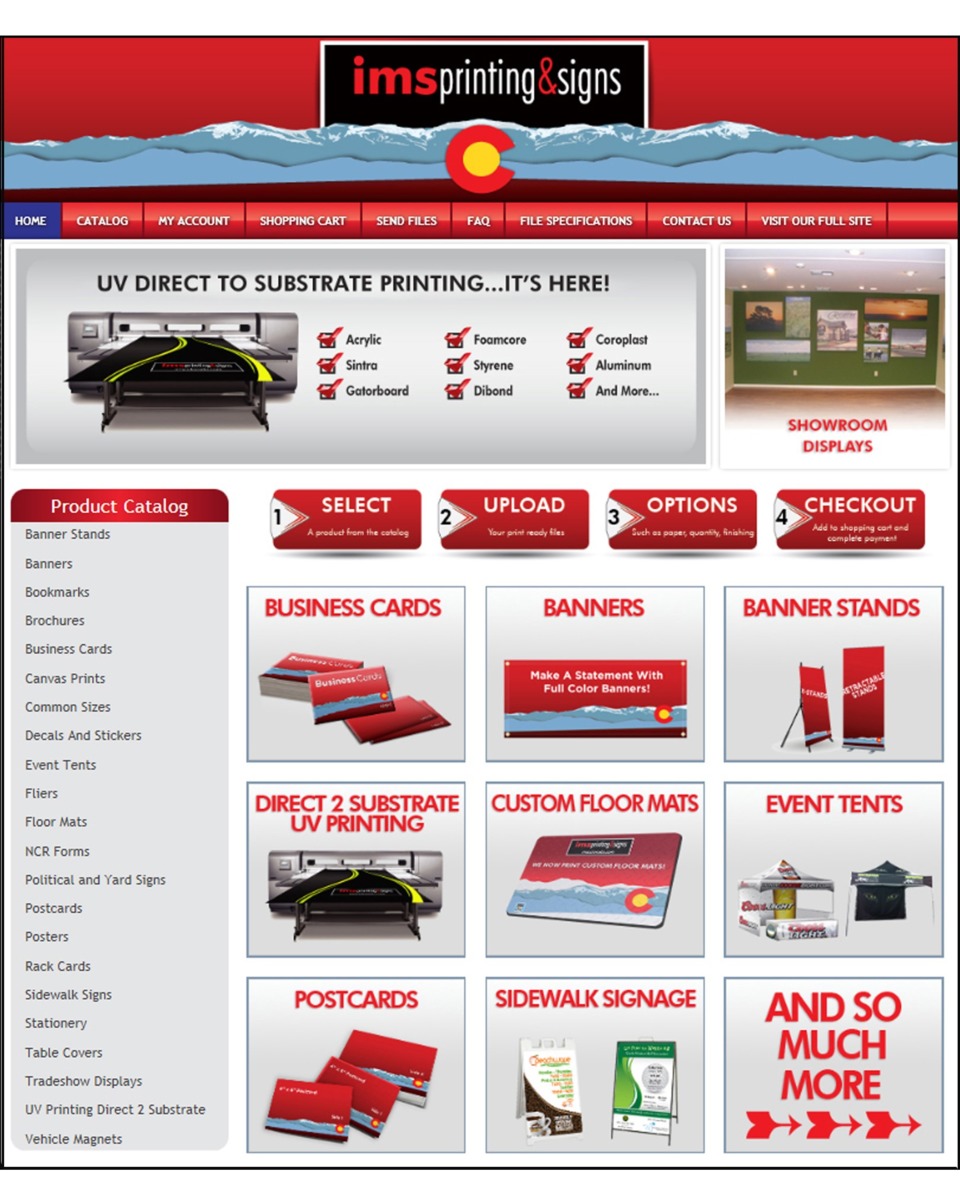
Mailing is not as specialized as it once was, making it easier to undertake. That's allowed PSPs to expand their service with mailing campaigns. “What we're seeing is a lot of activity in narrow verticals,” he adds. “Highly specialized web-to-print storefronts can produce very specific [products] like real-estate postcards or business cards.”
Rather than thinking about offering new products, PSPs should emphasize offering the best services, Lehn argues. “This is because it's not just about a catalog of business cards or brochures anymore,” he adds.
“Web-to-print must become more relevant to a firm's entire customer base. Every custom quote, and every other interaction, should be possible within the web-to-print portal. That means a very deep integration into the back-end MIS is needed to deliver the most efficient process to customers. PSPs that offer this will win the customer acquisition game.”
From Aberle's perspective, print providers should be able to offer any kind of product their end clients desire. “Our portal can accommodate any kind of product, including print, promotional, apparel, and wall coverings, for instance,” he remarks.
Thinking about what can be printed
The power of web-to-print can be summarized in words like “convenience” and “ease,” according to Kelly. “You make it easier for customers to do what they need to do, so it empowers them to use printing and the mail stream to achieve their business goals.”
But it's also conveyable in terms of greater opportunity – both from current products and new products. “I have a customer who does custom-printed hockey sticks and pucks,” Ciesemier says. “It's not about thinking in a traditional way.
“It's about thinking about what can be printed.”