
What’s Old Is New Again and Still Adds Value!—Part 2
Embellishment has been a function of print production for as long as there has been printing. In fact, it almost goes back to the beginning of the writing of documents. There is no doubt that embellishment does add value to the printed product.
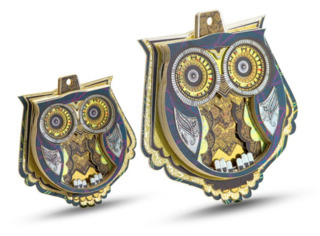
In part 1 of this article, we looked at the value of embellishments and their long history. In part 2 of this article we look at the mainstream enabling technologies that add embellishments and value to print and packaging production.
New developments in digital embellishment are happening all the time now that embellishments have finally begun to capture market awareness. There are many standalone digital embellishment devices, and now even some embellishment features integrated into digital presses or hybrid presses. This has created platforms to unleash design creativity.
Scodix was one of two of the earliest manufacturers to introduce digital embellishment, initially shown at IPEX in 2010. Scodix uses their PolySense polymer technology as the platform to create their wide variety of effects. They currently offer five different polymer consumables to generate different types of embellishments for their devices. These include spot high gloss and variable-density spot coating up to 250 microns in height or about 100 times higher than press varnish, enabling 3D effects. They can also support most conventional hot and cold foil films in conjunction with the polymers on a wide range of substrates including uncoated, coated, plastic, laminated, and many others. They also support glitter effects and Braille in addition to many other embellishment effects—limited by your own creativity. They recently introduced two new products, the Scodix Ultra 101 and Scodix Ultra 202, in which they have made their wealth of embellishment knowhow available to make embellishment more productive and affordable. The top-of-the-line product is the Scodix E106, which can support a B1 sheet with all of the previously discussed enhancements at up to 4,000 sheets per hour (sph). Heidelberg and other press manufacturers that have partnered with Scodix to bring embellishment to their offerings.
MGI, the other pioneer in digital embellishment, introduced their JETvarnish embellishment technology at drupa 2008. As the name suggests, they initially focused on using UV varnishes to embellish the printed product. Since then they have introduced JETvarnish 3D which can support up to 232-micron thickness effects. The JETvarnish 3D, which supports up to a B2 sheet at 3,123 sph and its sister production the JETvarnish 3D Evolution (EVO) which supports up to a 4,200 sph on a B2 and 2,291 sph on a B1 while printing on most paper and some plastic and laminated media as well. The JETvarnish 3DS introduced their iFOIL option, which supports hot foil in addition to the UV varnish effects. At drupa 2012, MGI introduced their AlphaJET press which was recently shown at ALL4PACK in Paris. This brings together all of the current and future MGI technology in a modular solution that will offer inkjet printing, UV varnish, foil, die-cutting. and even printed electronics embellishment. While it is really designed with smart packaging in mind, since it is modular, it will probably have many other uses. It may be released sooner; however, it will undoubtedly be in a prime position at drupa 2020.
Duplo, who is no stranger to finishing for digital equipment, introduced the moderately priced DDC-810 Digital Spot UV Coater, which uses varnishes to build up to 80-micron thick 3D enhancements. It can run A3 pages at 21 ppm and A4 at 36 ppm.
JetFX manufactures embellishment engines that uses NanoParticle Jetting™ of liquid polymer inks, varnish, and foil to create a wide variety of effects. It enables an efficient print process for any label type, and allows the application of digital foil, tactile silk screen-like effects, spot varnish, mini textures, digital holograms, full flood varnish in gloss and matte, and more. They offer branded solutions like the inline HP Indigo GEM, which was introduced in 2017. However, an offline webfed system is also available through an OEM relationship with AB Graphic International (ABG). JetFX also announced their RAINMAKER standalone sheetfed solution which can support a B2 format using the same technologies. When asked, they said their solution is at least 30% faster and 30% less expensive than their other market competitors. It is expected to be available for commercial shipping mid 2019.
KLUGE, still one of the manufacturers of analog embellishment technologies, introduced their DM-Liner® using KURZ: DIGITAL Metal® series of products. This is a cold foil solution that uses a dry or liquid (electro-ink) toner to print the design on the paper. The metallization is then transferred to the substrate and hardened with an LED UV. Depending on the model, it supports A3 or B2 format and can embellish with foil up to 3,600 sph.
Inline embellishment in digital toner presses has been evolving as well. While it started with raised varnish and is now available from Xerox, Ricoh, and Kodak, and it has reached new heights (no pun intended). The Kodak NexPRESS fifth station supports dimensional inks in Clear, Gold, Opaque White, Pearlescent White that can also simulate silver with a grey tint underlay, and Red Fluorescing dry inks you can embellish inline. Ricoh supports Opaque White, Neon Pink, and Yellow toners for their fifth station. The Xerox Iridesse can not only add 3D varnish effects, it can also include gold and silver metallic and high opaque white dry toners. Adding Color-Logic software to many of these digital press inline solutions can extend these colors to a wide range of metallic embellishments. Color-Logic software is supported by many printer manufacturers to create enhanced embellishments and security printing.
Xeikon is working on one-pass inline digital embellishments using their Fusion Technology. It should include high opaque white, foiling, matte, and gloss varnish in flood and spot modes when released. It is focused on their label market, specifically Wine, Spirits, and Beers. They expect to release the initial Fusion options later this year.
In Hot and Cold foil stamping there is a fair amount of waste, depending on the image area and the size of the carrier sheet. An even newer method of embellishment was developed by Landa Digital Printing in the 21st century. Initially called Nano-MetallographyTM, it was initially shown at drupa 2016. This new metallization process is designed to produce zero waste at less than half the cost of foil. The process starts with the printing of a trigger image, similar to a cold foil process. This trigger image can be printed using any print technology.
The trigger image enters the Landa metallization module, which contains the metallization technology. This consists, at a minimum, of metal NanoFlakes and a donor roll. As the substrate with the trigger image printed on it passes by the donor roll, which is covered with a mono layer of NanoFlakes, the flakes are attracted to the trigger image. The result is a metallized print. This technology was subsequently sold to Altana, a global leader in specialty chemicals and coatings, and we should expect that they will license it and supply the NanoFlakes at some point.
Moving away from printed embellishments, Highcon produces a line of digital cutting and creasing equipment. Instead of using dies and counters it uses a high-power CO2 laser and “DART” (Digital Adhesive Rule Technology), which uses a UV curable resin. The Highcon Beam can support 30 x 42-inch sheets at 5,000 sph, while their other models can support up to 2,750 sph. They offer optional modules for stripping, variable cutting, and fine detail cutting. Instead of hours or days for die making the make ready for these die cutters is about 15 minutes.
We can expect to see even more development in the area of embellishment technologies not just in labels and packaging, but also in commercial and industrial print as well. We can also expect to see increased adoption. And while there are additional costs for embellishment, the incremental operational costs are far outweighed by the incremental value it can add to a printed product. Whether it is all about design enhancement or security, the needs for embellishment today isn’t that different than what it was in the 1st century—adding awareness and value to content.
More to Come…
I would like to address your interests and concerns in future articles as it relates to the manufacturing of Print, Packaging and Labels, and how if at all it drives Industry 4.0. If you have any interesting examples of hybrid and bespoke manufacturing, I am anxious to hear about them. Please feel free to contact me at [email protected] with any questions, suggestions or examples of interesting applications.


