The Cutting Edge
Making sure you’re ahead of the curve as vinyl cutter/plotters continue to evolve is an essential part of choosing such a device.
A vinyl cutter can be a hugely profitable and functional tool in any digital graphics and sign business. But making sure you’re ahead of the curve as vinyl cutter/plotters continue to evolve is an essential part of choosing such a device.
These days, there are a lot of considerations to keep top of mind in your search for the right cutter/plotter. Is it a fit for the markets you’re targeting, the applications in which you specialize and the output you produce? Does it offer the quality and functionality you need while respecting your bottom line? And has its software kept pace with the improvements in cutter/plotter technology, offering the blend of power and user-friendliness so crucial to profitability?
In the pages ahead, we look at all these factors and more, to help guide you to just the right vinyl cutter/plotter for your individual shop.
What You Need to Know
Current work is among leading factors that should be considered prior to buying a cutter/plotter, said Daniel Valade, product manager of VersaStudio and Vinyl Cutters with Irvine, CA-based Roland DGA. Be sure to give long thought to the types of jobs that make up the bulk of your shop’s work flow, he advised.
“Your needs and requirements can differ considerably depending upon the specific markets you’re targeting, the type of applications you need to perform and the output you’ll be producing,” he observed. “Also make sure the vinyl cutter you’re considering is wide enough for assignments you’ll be taking on, and that it will provide enough down force to get the job done properly.”
Of course, one of the most important factors is budget, he added. Concern for the bottom line means you will want to seek a vinyl cutter/plotter that offers the quality and functionality you’re striving for at the lowest possible price.
“Roland offers a variety of advanced CAMM-1 Series models that deliver unsurpassed quality, precision, reliability and ease of use at prices even small and start-up businesses can afford,” he said.
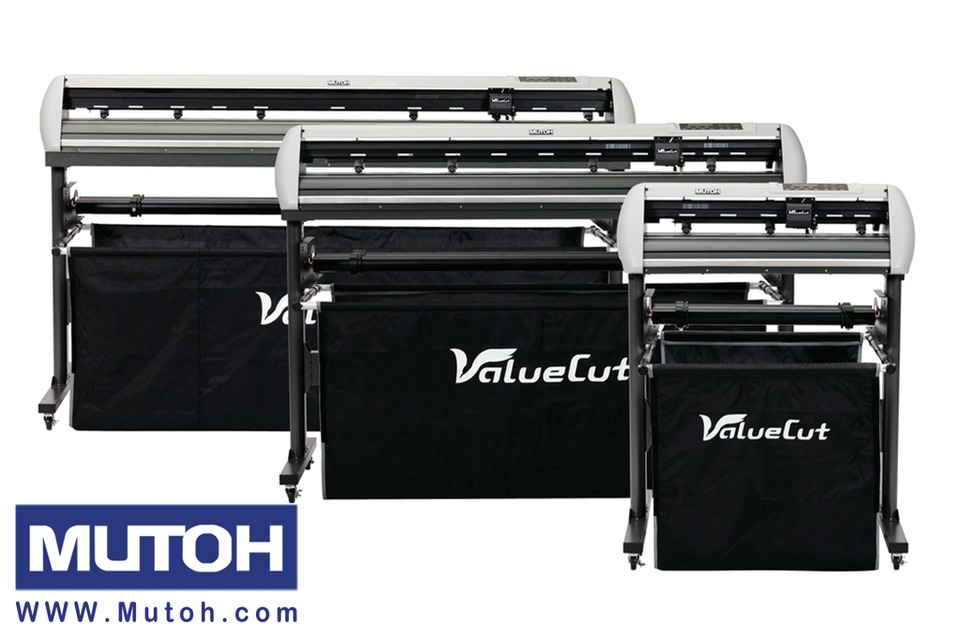
It’s also a good strategy to try to match productivity levels with performance expectations, said David Conrad, director of marketing, North and Latin America, for Phoenix-based Mutoh America, Inc. Keep it simple, he urged, but by the same token try to avoid outgrowing you cutter every 6 to 12 months.
“Plan for your cutter to be a part of your business from the day you buy it and [into] the near future to satisfy expectations you have for application and growth levels,” he said.
“Choosing a partner and a plotter that is reliable and will support you when you need it is also important. Ask yourself, ‘What will happen after the sale?’ And be sure that the answer isn’t a mystery.
“Reputable vendors and dealers are important to helping you make proper purchase decisions up front, and supporting you as you get started.”
Werner Waden, president of Colex Imaging, Inc. in Elmwood Park, NJ, agreed that selecting a vinyl cutter requires digital graphics and sign businesses to consider price, versatility and the ability to cut other materials. He points to the Colex Sharpcut Flatbed Cutter as offering the ability to cut vinyl, foam board, gator foam, styrene, Sintra, Coroplast, aluminum, acrylic, di-bond and more.
“The Triple Interchangeable Tool Head allows the digital graphics and sign business the ability to cut vinyl [and] cut another application without changing the tool,” Waden said. “Ability to trim, crease and kiss cut a variety of rigid and flexible substrates allows a digital graphics and sign business to maximize its finishing capability without having to outsource or turn away jobs.”
Improvements Enhance Ease, Profits
Like the wide-format printer market, plotters follow the same path of bigger, better, faster, Conrad said. Plotters have gotten wider, faster, and provide easier-to-learn user interfaces for simpler operation.
Cut path, registration, cut depths, software enhancements, and cutting head mechanics are also features that have improved and will continue to improve, along with speed and accuracy, to boost productivity and performance.
More than anything else, advancements and improvements in software, including Roland CutStudio and VersaWorks, are making vinyl cutters easier to use than ever before, Valade said. The software has not only become increasingly user friendly, but has in addition grown steadily more powerful, allowing for maximum productivity and versatility with less effort.
In addition, advancements in “print, then cut” technologies, such as better registration accuracy, are also increasing ease of use and profitability for shops.
Materials have evolved as well. The availability of new materials, including sticky flock, colored glitter and patterned vinyl, is also helping open up new applications and opportunities for print service providers, Valade said.
At Colex Imaging, improvements to the Colex Sharpcut have included increased cutting speeds to 3,000 inches per minute and an energy efficient 6-Zone Vacuum System, Waden said. The Vision Registration System can read any diameter registration mark, crop mark or square, resulting in highly efficient production. The time-saving material library creates and stores individual settings for specific media and tools that are cut on a repeated basis.
“Colex is doubling its manufacturing space and investing in new machinery to produce more wide-format cutters to meet the ever-increasing demands from the marketplace,” Waden reported.
Optimizing Your Equipment
Valade reported getting the most from your vinyl cutter/plotter investment requires users to take advantage of the capabilities and versatility of the device to the fullest extent. By doing so, you will be able to offer your customers the widest possible spectrum of products and services, accept different types of jobs, increase your customer base and generate incremental revenue.
Following manufacturers’ recommended regular and correct maintenance procedures will also help you gain the most from the device, Valade said. These measures will help you optimize performance, and extend the life of the device.
Performing a few simple steps will help ensure you’re getting optimum performance from your vinyl cutter/plotter, he adds. Before starting any job, always make sure you’re working with a “clean” cutter protection strip. A damaged strip can negatively affect the precision and quality of the output you generate. “It’s also key to check your blade holder at the start of each day to make sure it’s in good condition, and that the blade can swivel freely,” he said. “Checking the blade at the start of each day for chips or other imperfections that could negatively affect precision and performance is also crucial.”
The best way to maximize the value of a cutting plotter is to keep it cutting, Conrad said. Being able to print jobs while your plotter is cutting is key to shop productivity and essential in maximizing time, resources and profits.
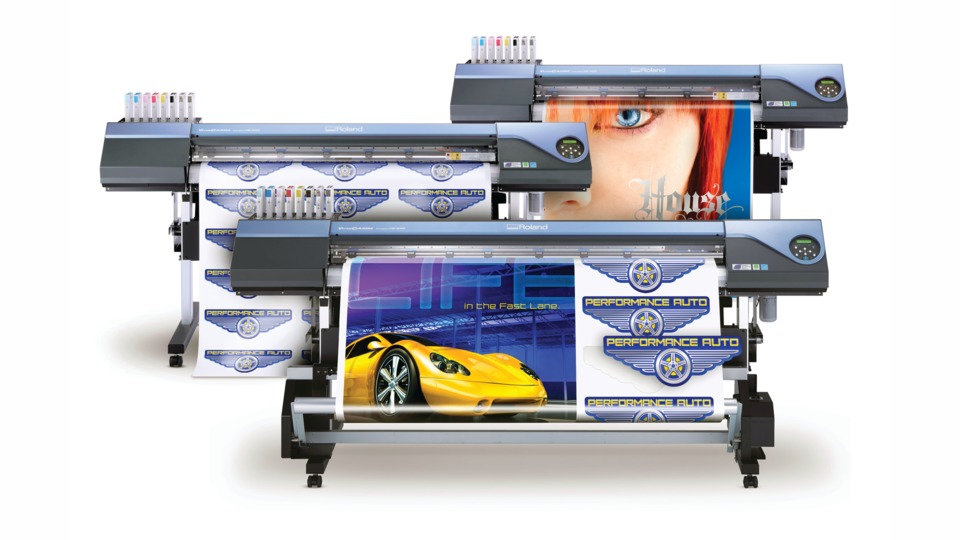
“Some cutters are built into the printer, which is only ever a good solution if you have limited space,” he reported.
“If space is not a factor, and productivity and time management is more critical to your business, you will be better served with a cutting plotter stand-alone from the printer. Having a separate cutter enables your printer to do what you purchased it to do, print. [That] allows you to send finished print jobs to the cutter while you start your next print job, saving you time, resources and money.”
So what happens when you have a print/cut device and the cut mechanism is out of service? In those instances, Conrad said, your printer is also out of service until the cutter can be repaired, and when you’re not printing, you have ceased making money. The goal is to always keep your printer printing and your cutter cutting. The cost to purchase a print/cut device versus a printer and a cutter standalone is virtually the same investment.
“So if you’re not strapped for floor space, do yourself a favor,” he advised. “Buy a printer and a cutter independent of one another.”