Tactile Printing: Something Digital Can’t Match
Dimensional or raised printing uses clear toner (or other consumable) to create raised effects and a “wow” factor.
Whatever you call it — 3D printing, raised printing, or dimensional printing — using clear toner or other consumable to create raised or dimensional effects in print creates a “wow” factor that no other channel can replicate.
Anyone who has seen these effects in person knows how powerful they can be. A football has the texture of a football. The leaves and bark of a tree look and feel like the real thing. Raised effects create a tangibility and dimension that are unique differentiators for print.
Clear toner can also be used to create subtle watermark effects, flood the entire image, or draw attention to headlines, images, or text areas on the page. It can be used to simulate pearlescents and metallic. But it is dimensional printing that is capturing so much attention right now. How is this capability being handled out in the field?
On digital presses, raised effects are created using multiple passes of clear ink on a fifth station on the press. These effects can range from subtle to dramatic depending on how many passes the press applies. Xerox’s Color 800/1000s, for example, can produce up to seven layers of clear ink. HP Indigo digital presses can produce 15 passes, 30 passes, or 45 passes.
If you want more extreme effects, Scodix presses can produce up to 250 microns using polymer. This process, which can be produced inline or offline, applies a film over the printed sheet that is either burned away or solidified with a laser to create high-dimension, multilayer effects. Other “3D” products include the JETvarnish 3D, which produces raised effects from 3 microns to 200 microns; and UV printers such as the LDP IUV flatbed UV and Roland DG VersaUV.
Among the digital press manufacturers offering clear ink are Kodak, Ricoh (new Ricoh ProC7110), HP, Xerox, and MGI. Because clear is applied on a digital press, dimensional effects can be personalized along with the text and images.
‘An Orange Feels Like an Orange’
“We have a Kodak NexPress that does a beautiful job with dimensional printing,” said Sandra Schler, account manager at Premium Color Group in Carlstadt, NJ. “You can make an orange feel like an orange! I've even done business cards with it. The raised image adds both beauty and interest to a card.”
Bill Drexel, sales executive at Prism Color Corp. (Moorestown, NJ) is a big fan of the process, too. Because the process is so new, however, he outsources these jobs as needed.
“Everyone is still learning about it,” he said. “But it does some really cool things. With clear toner, the effect is the same height, no matter where it is on the page. With Scodix, however, it’s multi-dimensional. Plus, you can fade it off and do all sorts of neat things. You can embellish the shape of a football with the leather grain and laces, the whole nine yards.”
Eyeballs for Optometrists
Acculink, a trade printer located in Greenville, NC, does a lot of dimensional printing on its Scodix press, which it refers to by its trade name, 3d UV. It runs the device offline any of its three HP Indigo 5600, 7600, and 1000 presses.
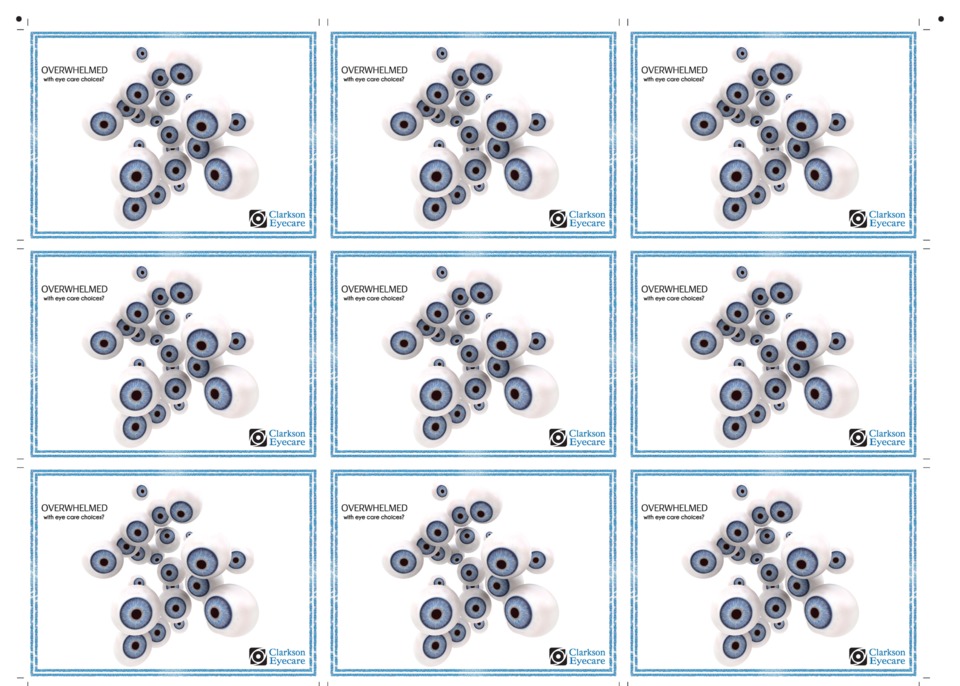
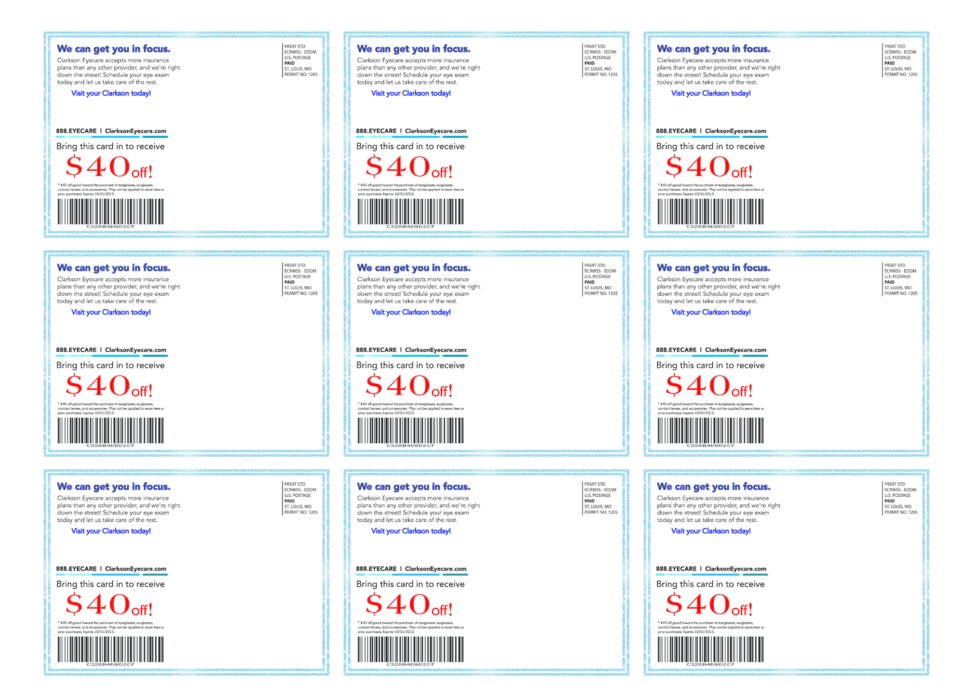
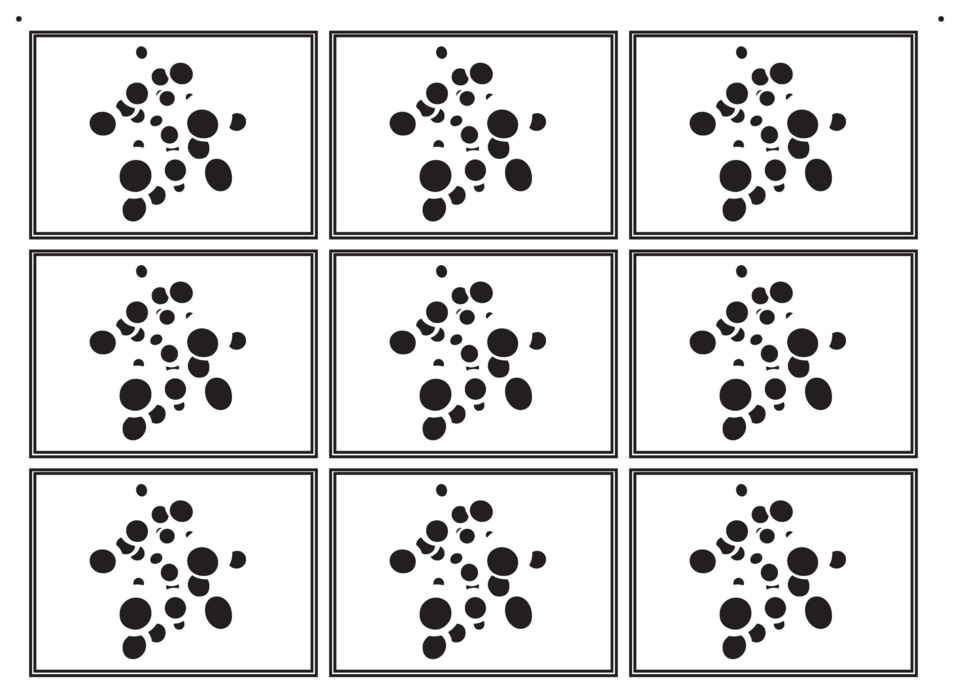
One of Acculink’s favorite 3d UV pieces is a postcard it produced for an optometrist. On the front of the card was a set of eyeballs. On the iris of each eye, the customer used 3dUV to make the iris pop in relief—sharp and glossy.
Initially, the client designed the postcard with a 10 percent UV layer as a test. Once the sample was printed, however, Acculink felt that the effect was too subtle. Rachel Doyle, art director for Acculink, suggested bumping all the way up to the maximum height of 250 microns. “When we received the file and saw that the areas were varied and small enough that high levels would hold without issues, we suggested substituting 100 percent UV,” she says. “It absolutely popped.”
While clear toner on commercial presses can create dramatic visual effects, it is not clear how many press owners are using it to create dimension and texture. The challenge is that, to create raised effects, the press must print multiple passes. This raises issues of TAC, as well as registration.
“The marketing pieces are eye-catching, especially when properly designed, but I just don't see clear toner getting all that much use, despite the clamor for it,” noted Randy Norian with Des Moines, IA-based Laser Resources/Konica Minolta, contributing to a discussion on LinkedIn’s Digital Printing group. “With clear toner, if you have an area with high TAC, you can't put much more, if any, clear over it. I would be very interested to see what portion of clear-capable toner engines really get put to use.”
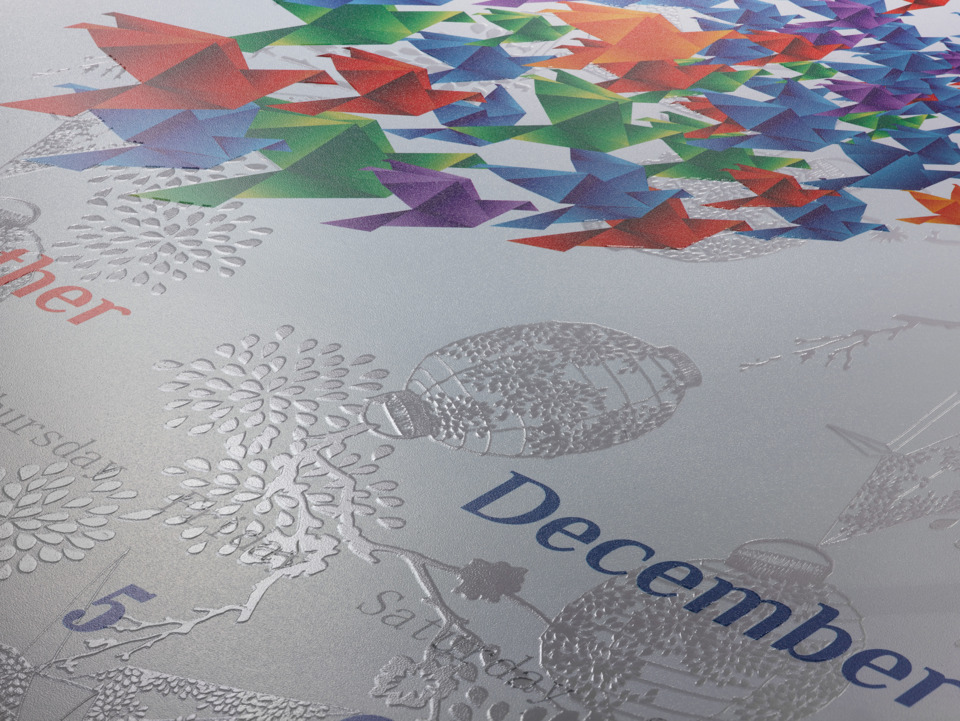
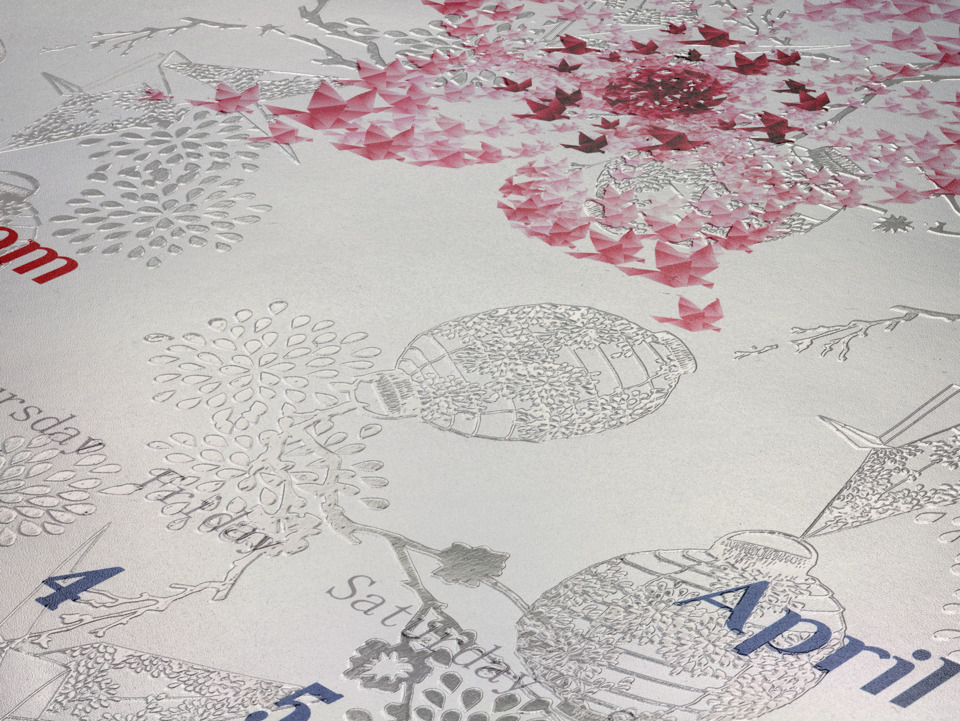
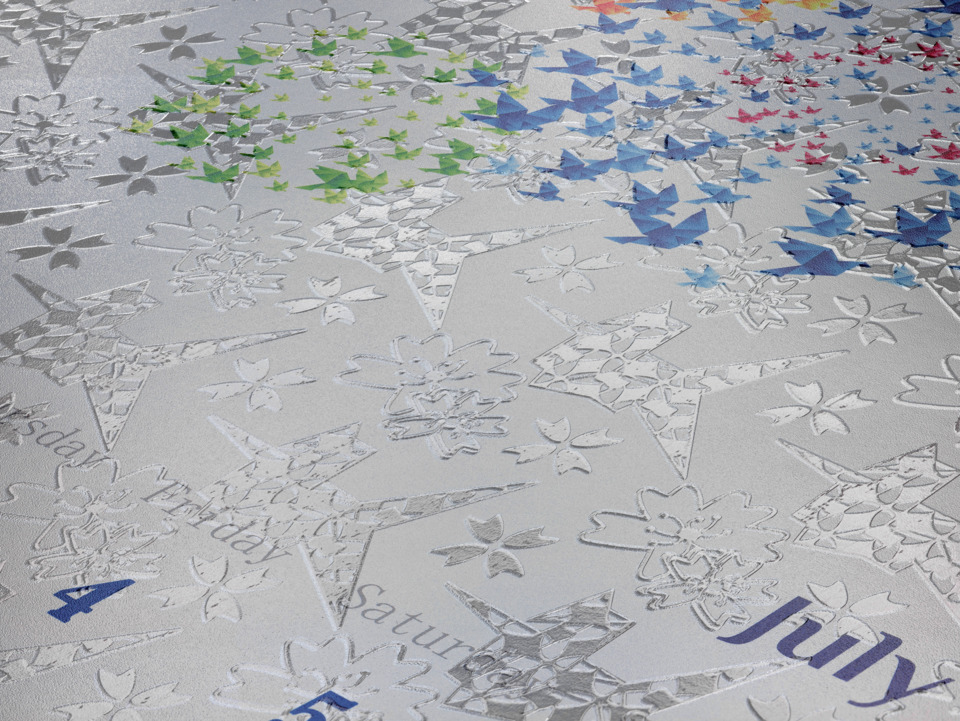
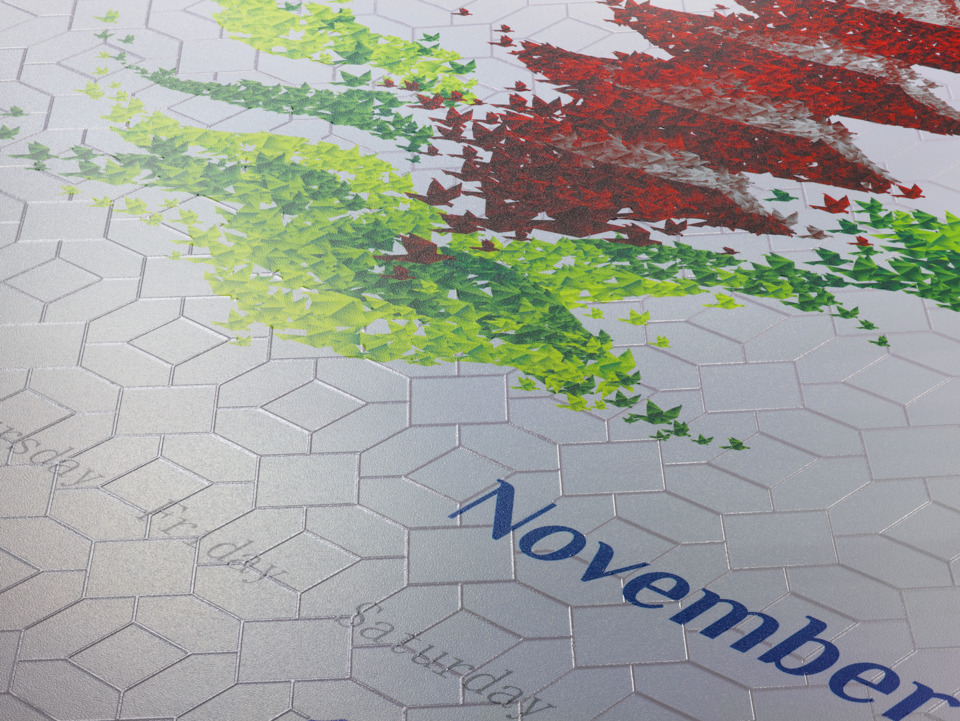
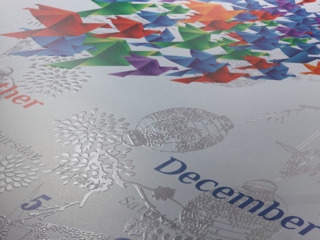
Another challenge is cost. This is a process that can elevate the cost of printing considerably. This is why McArdle Print Solutions (Marlboro, MD), uses a calendar to explain and illustrate different techniques. The calendar, called “Twenty13: Details Matter,” lets clients see the range of effects and initiate a discussion about expectations and price.
“We are all such visual people,” noted Lisa Arsenault, president of McArdle. “Clients don’t know what they don’t know until you show them.”
For the February image, McArdle showed off its clear HP Indigo ElectroInk transparent with an image of Puxatawny Phil printed on Mohawk’s Everyday Digital Silk 100-lb. cover. Phil’s outline and the details of his fur are overprinted with 15 hits of clear, illustrating a subtle raised effect. For the November image, McArdle used an image of a whale contrasted with the more dramatic 45 hits of clear on a dark ocean background, creating an illusion of motion.
“If you look at February, then compare it to November, you can see a definite difference,” said Arsenault. “With the whale, it looks like the ocean is moving.”
While there are benefits to the visual impact of the piece, every hit of clear raises the price of the job, so Arsenault wants clients to understand upfront exactly what they are going to get. “Sometimes people will look at the November image and say, ‘I like that, but I want it to be stronger,’ and we are able to say, ‘This is the most dramatic it can get.’”
Clients need to keep in mind, too, that clear inks or toners are not designed for rub-resistance, so dimensional effects might need to be protected in an envelope or carrier.
Extreme Dimensional
For clients needing even more extreme effects, presses like the Scodix produce even more dimensional results. Working with these processes may require trial and error, however, especially when used offline.
Drexel of Prism Color, for example, recently had to switch from Scodix to raised UV to meet one client’s specialty production needs. “Some artwork lends itself quite well to Scodix and some not so much,” Drexel explained. “In my case, the artwork was ideal. However, the piece itself had to be run on an offset press due to certain security features (invisible UV ink) that prevented it from being run digitally. Because of that, the run became an offline Scodix application, which created a challenge with placing the Scodix targets.”
Scodix handled register by reading preprinted targets. If the targets aren’t right, then everything is off. “Although Scodix has a very nice support feature on how to create and place the targets on the prepress side, it's not one size fits all,” said Drexel. “The process is so new that very few people have the knowledge and experience to pull it off successfully the first time, so Scodix does have a learning curve. On the flipside, if you’re going with Scodix inline, the process is quite simple and you can achieve fantastic results.”
Fantastic results are what clients are looking for, especially when seeking to help their pieces stand out in the marketing crush. Whether using clear ink on the fifth station of a digital press or technologies like Scodix, dimensional printing breathes fresh life into traditional printing, it just has to be balanced with cost, realistic expectations, and a bit of patience.