The Shroud of Turin
EFI Reggiani makes history printing the only authorized replicas.
When you want to create an authentic replica of one of the most famous and treasured historic artifacts ever discovered, where do you turn? If you are the curators of the Shroud of Turin, you turn to EFI Reggiani, EFI's sustainable pigment-based digital textile printing technology.
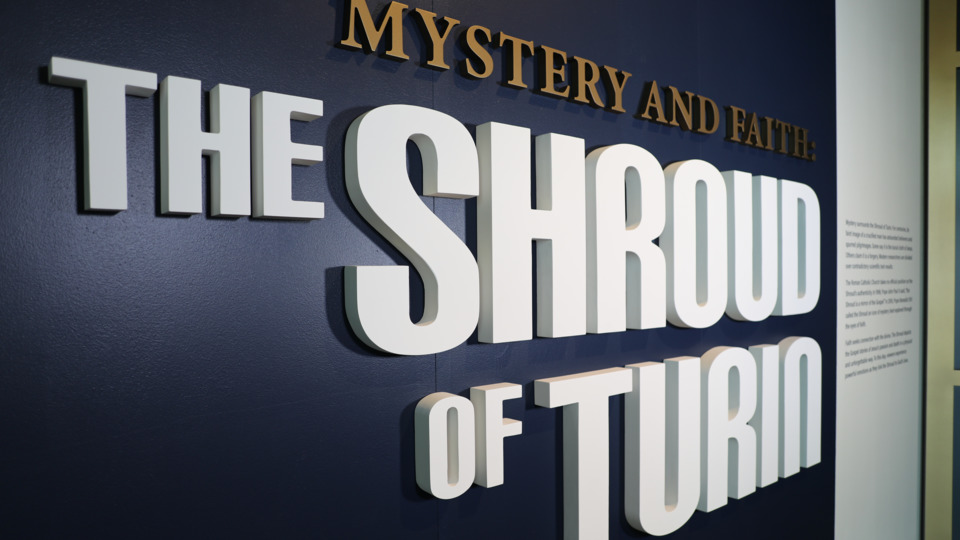
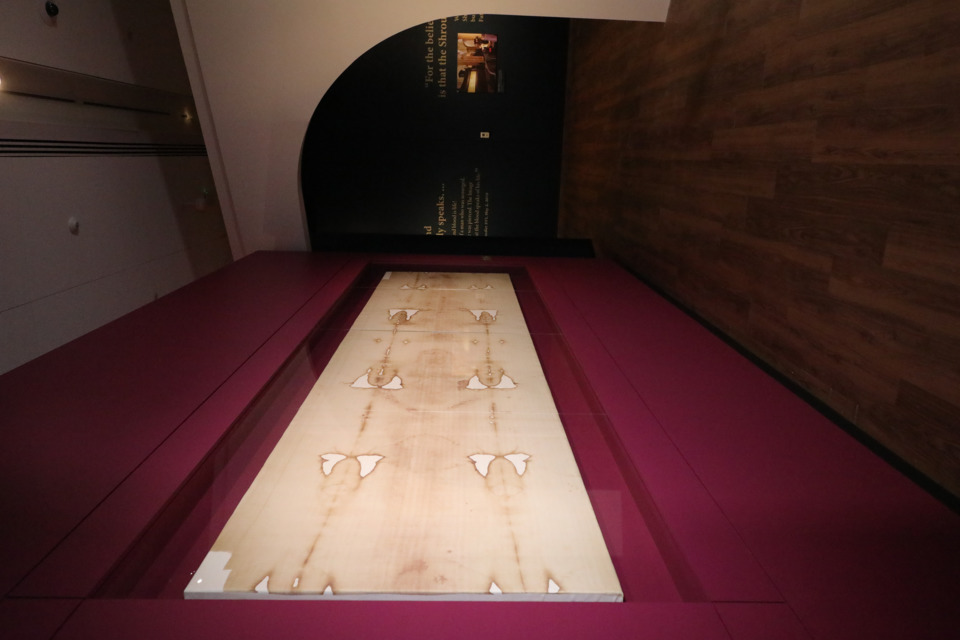
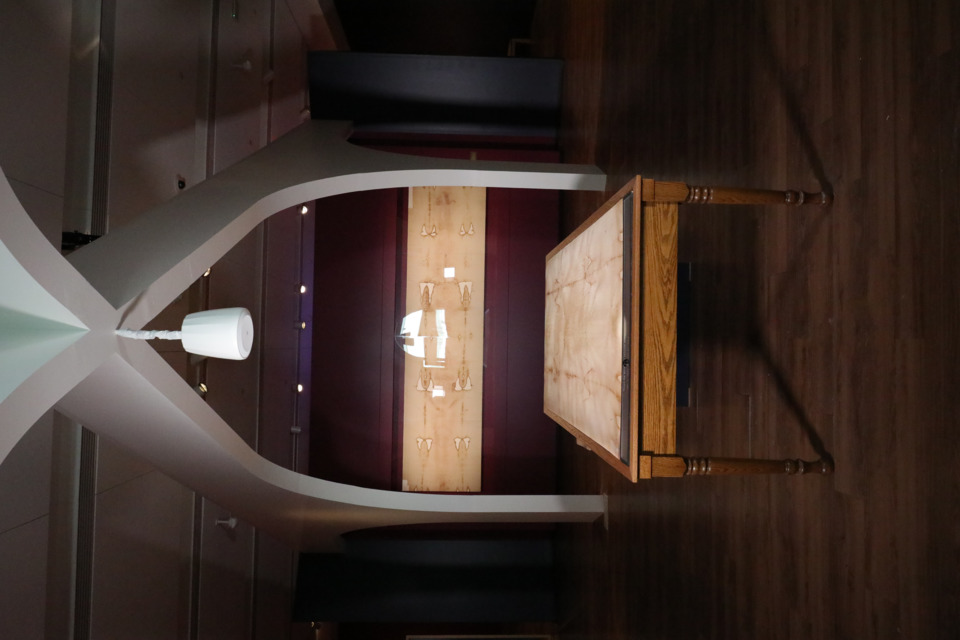
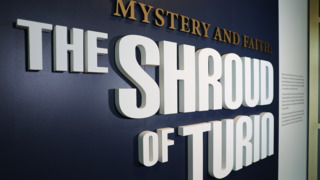
February 2022 saw the opening of the exhibit, “Mystery and Faith: The Shroud of Turin,” at the Museum of the Bible in Washington, DC. At the center is the replica of the Shroud printed by EFI Reggiani on its TERRA Gold Digital Press at EFI Reggiani’s headquarters in Grassobbio, Bergamo, Italy. It is one of only 100 official replicas authorized.
Dr. Jeff Kloha, chief curatorial officer for the Museum of the Bible, speaking at the press event several days earlier, noted the irony of the timing of the opening of the exhibition.
“This exhibit was planned to open last year; then COVID-19 happened, which in some ways, was oddly appropriate,” he said. “The Shroud has always been connected to times of stress and danger, and yet has also been a source of comfort, all the way from the Black Plague [in the Middle Ages] to the ostentations during the last two years during Holy Week.”
For EFI Reggiani, the honor of being selected to create the only authorized reproductions of this historic artifact cannot be overstated. National Geographic has called the Shroud “one of the most perplexing enigmas of modern times.” It stands unique among all historic artifacts, with no established explanation for the haunting image it carries.
Replicating History
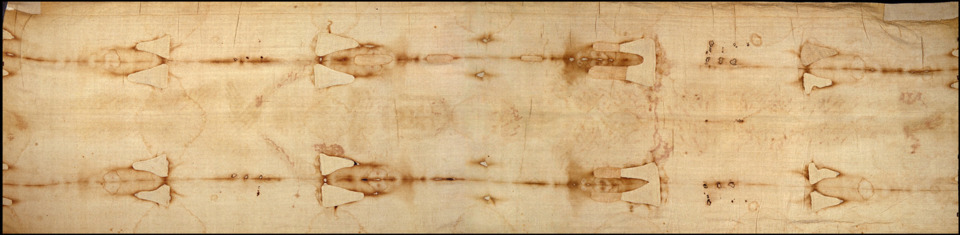
First mentioned in historical documents in the mid- to late-1300s, the Shroud of Turin measures 14 feet 5 inches by 3 feet 7 inches and bears a faint, yellowed image of a naked, crucified man, with his hands folded across his groin.
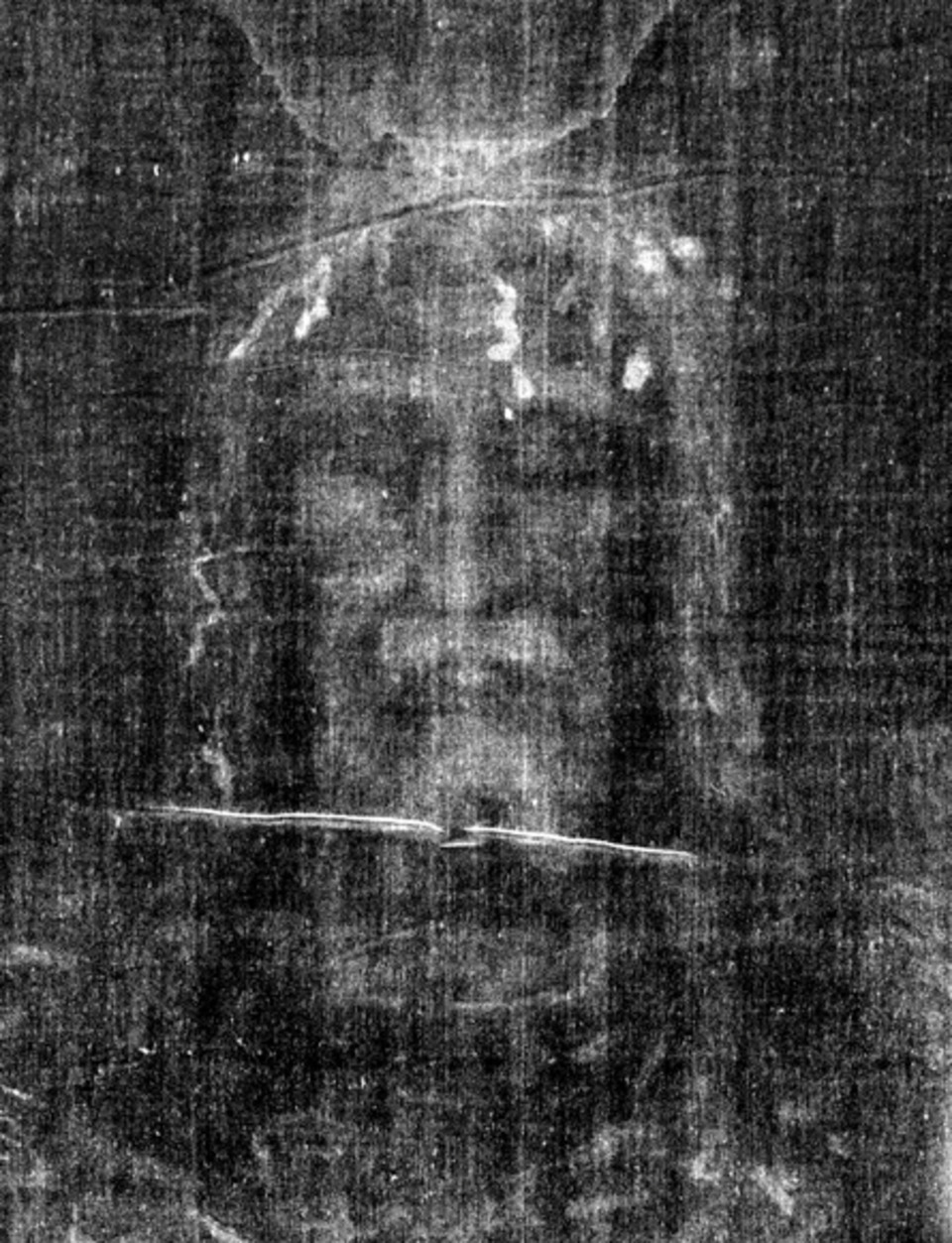
Despite centuries of study, the presence of the image remains unexplained. Images painted with dye or pigment, which would have been characteristic of the time, would have soaked down into the cloth, yet the image of the crucified man rests on top of the cloth. The image also has characteristics of a photographic negative, a concept not introduced until 1826 by French inventor and scientist Nicephore Niepce, centuries after the Shroud was discovered.
Radiocarbon dating conducted in 1988 puts the age of the shroud between the years 1260 and 1390. However, the dating is disputed. Crucifixions were abolished by Constantine in the fourth century A.D. The mysterious origins of the cloth, the samples of pollen, dirt and other environmental artifacts embedded in the cloth, and the unexplained negative image bearing striking similarity to the New Testament descriptions of the crucified Jesus have led many throughout history to believe it is the cloth in which Jesus was buried.
Many theories have been put forth as to the existence of the image, but none have been conclusive. This has left the Shroud of Turin cloaked in mystery. If it’s not the image of the crucified Jesus, what is it? History awaits the answer.
Centuries of History
As the debate around the Shroud continues to swirl, the relic sits quietly in the Cathedral of St. John the Baptist in Turin, Italy, where it has lived since 1578. Because of its age and historical significance, it is rarely removed for examination. The haunting image has captured worldwide interest thanks to photographs taken in 1898, 1931 and 1978 (ultraviolet). High-definition imaging was authorized in 2008.
Work on producing replicas began in 2020 with a project called Lino Val Gandino that included Italian municipalities, districts and a family-owned textile company called Torri Lana 1885, which produced the linen on which the replicas were created. Only 100 replicas were produced to be distributed to museums and churches around the world. The process was meticulously overseen by a consortium of companies, including EFI Reggiani.
To produce replicas with the greatest possible historic accuracy, Lino Val Gandino chose the EFI Reggiani digital textile printing technology using water-based pigment ink, high-resolution printing, and the ability to reproduce even the most subtle variations in color. EFI Reggiani was also selected for the technology’s image fastness and overall sustainability of the printing process.
How to replicate the gradations of an image and a substrate aged 700 to 2,000 years? As with any printing process, it started with the right substrate. Since the type of linen used for the Shroud is no longer manufactured, ancient seed was used to grow the linen on land owned by the Torri family. The linen is from the flax plant of the Eden variety, cultivated in Egypt using the same process as 2,000 years ago. After harvesting, processing the flax plant into fibers and spinning, the resulting linen yarn was used to weave 600 meters of canvas used in the official replicas.
The linen fabric was delivered to the EFI Reggiani headquarters, where it was printed. The file size necessary to maintain even the finest details of the image was extraordinary—1 GB—taking up the entire hard drive of a single PC.
“Thanks to the performance of EFI electronics and the TERRA Gold printing engine, we were able to manage a file of that size and stream it to the printer quite quickly,” said Micol Gamba, product marketing manager, EFI Reggiani.
Working with the Museum of the Shroud of Turin and in collaboration with the International Center for Studies on the Shroud, the team began the process by sampling the face portion of the Shroud in six different variants. This allowed the replication of the very subtle and unique shades of color as authentically as possible. The image was output on EFI’s TERRA GOLD digital textile printer, whose high resolution (up to 2400 dpi) and variable dot size (4 to 72 pl) allows precise detail down to even the smallest variations in the cloth.
Challenges Beyond the Usual
“The challenge, compared to a normal print, was the impossibility of comparing against the original and being able to read the actual color to be reproduced, as we normally do when profiling on specific color targets,” Gamba said. “The experience of our technologists and printing experts and their deep sensitivity to color and digital reproduction have been core to achieving a highly accurate final result.”
Also helpful is the fact that the TERRA printing solution uses eight colors rather than the traditional CMYK. The addition of red, blue, orange and green inks aided in the ability to reproduce these very difficult colors with great accuracy.
The EFI Reggiani TERRA Gold uses a highly efficient polymerization process that takes place as the printed textile goes through the printer’s on-board dryer. This eliminates the need for steaming or washing, normally required for direct-to-textile applications. Not only does this result in a greener process that uses less time, water and energy, but it achieves a superior printing result.
“In the TERRA Gold, we have a very precise machine capable of enhancing and reproducing even the most sensitive details,” Gamba said. “The TERRA pigment inks create images not only with great definition and color intensity, but with tremendous light fastness, which means that the print and the colors will be able to resist years and years of exposure.”
Want to see for yourself? The exhibit “Mystery and Faith: The Shroud of Turin” is running from Feb. 6 – July 31 at the Museum of the Bible in Washington, D.C.
Photo Credits:
Negative image of the face on the Shroud, 1978 STURP tests.
©1999 Barrie M. Schwortz Collection, STERA, Inc.
Full image of the Shroud, 1978 STURP tests.
©1999 Barrie M. Schwortz Collection, STERA, Inc.
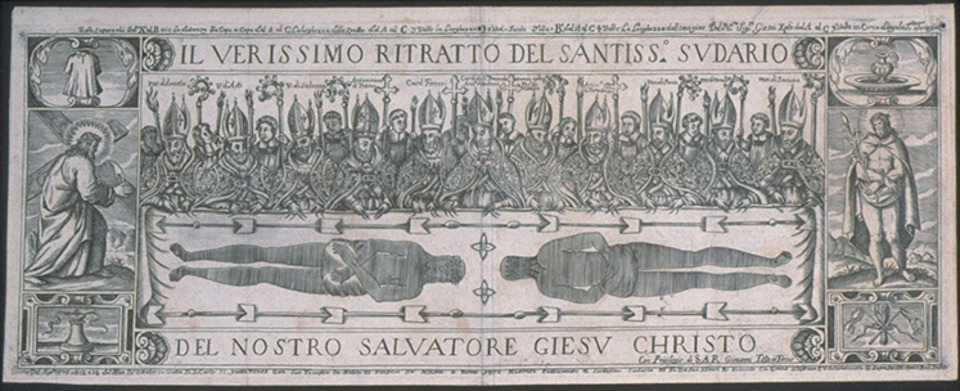
Commemorative print of the 1578 exhibition of the Shroud in Turin.
©1999 Barrie M. Schwortz Collection, STERA, Inc.
For all other images, please use the following photo credit when using any of the provided images: Museum of the Bible. © Museum of the Bible, 2022.