Wrapped Up in Vehicle Graphics
Even after a full 10 years, the vehicle wraps field continues among the wide-format print industry’s most fluid, dynamic segments. The market is also evolving quickly, from one aimed at business fleets to one in which individual car owners are also potential clients.
Peter Salaverry sometimes draws amusement from the promotional efforts of competitors. As CEO of Dallas-based vehicle wraps firm SkinzWraps, he’s in a good position to judge those efforts, and one he finds comical is the promotion by a wraps purveyor who trumpets his company’s 30 years in the field.
“I love it when somebody claims 30 years experience in this business, and the business is only 10 years old,” Salaverry said with a derisive chuckle.
Even after a full 10 years, the vehicle wraps field continues among the wide-format print industry’s most fluid, dynamic segments. Materials and tools are improving, helping simplify and expedite production and installations. Meantime, the market is also evolving quickly, from one aimed at business fleets to one in which individual car owners are also potential clients. Ultimately, indisputably, the field is growing, both in its primary market and submarkets.
The reason for that ongoing growth is pretty simple, said Keoni Denison, director of the Carolina division of Washington, DC-based Capital Wraps, for whom 85 percent of business derives from vehicle wraps. It comes down to the effectiveness—or lack thereof—of traditional advertising media, he said.
Newspapers and other print media, TV, radio and Yellow Pages all are waning in advertising efficiency. “You have to have an online presence these days, but after that what are your options?” Denison asked. “If you have vehicles, covering them with wraps as opposed to the traditional letters, it makes a tremendous difference. In sharp contrast to the sea of vans with white letters across their sides, vehicle wraps are four-color graphics or pictorial representations that are great at drawing eyes and capturing attention. We’ve worked both with companies that only have one or two vehicles, as well as those who have a sizable fleet and add 15 or 20 vehicles every year.”
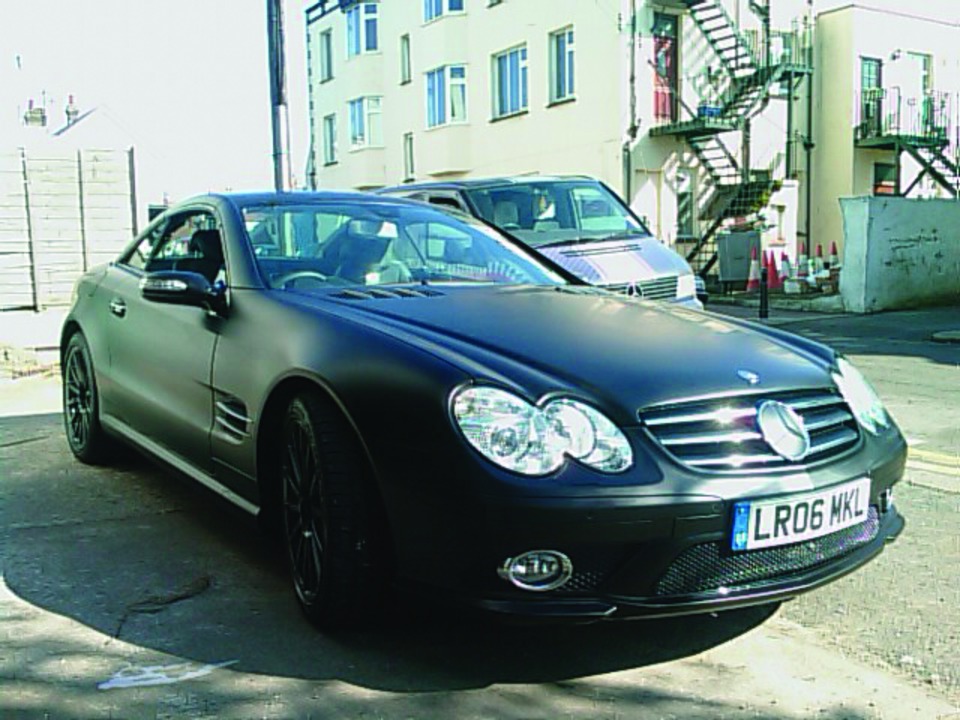
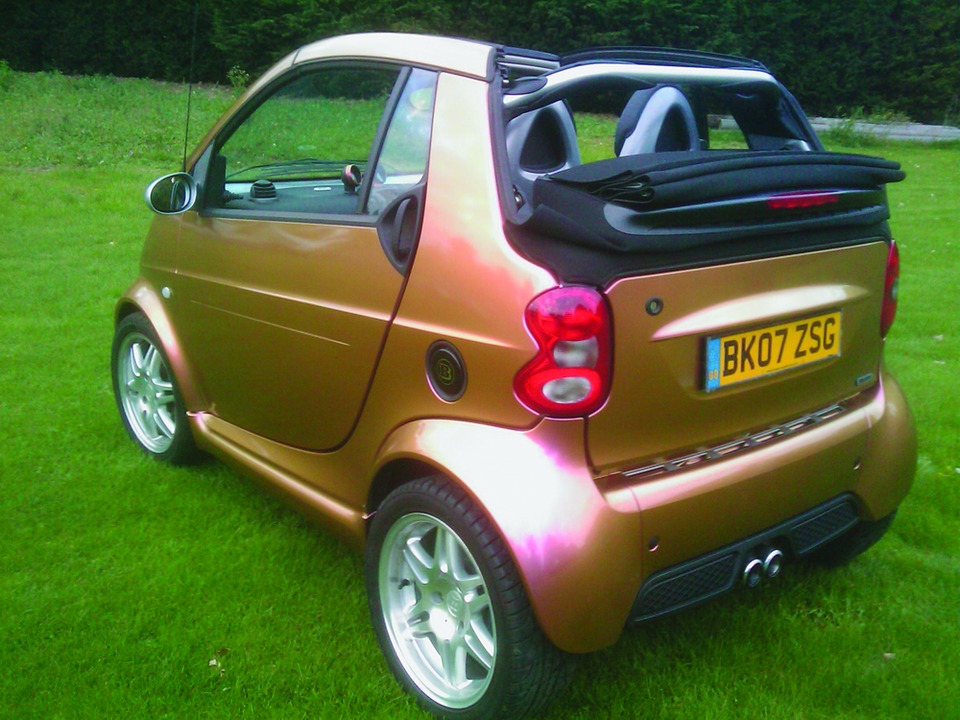
The prime vehicle graphics market of business fleets continues to deliver opportunity to providers. But helping the segment grow are offshoots of that business into the market of private car owners, Salaverry said. In recent years, matte black vehicle wraps have become favorites of many car owners. Salaverry predicts interest in having the appearance of cars altered through vehicle graphics will only grow as colored and camouflage films appear.
Sean Tomlin is another observer who foresees the segment continuing to grow. Tomlin, owner of Millville, NJ’s Designer Wraps, said the “personalization market” is bringing about demand for greens, blues and carbon fiber films.
Still ahead, the market is likely to see customized treatments based on designs or photography created by the car owners themselves. “People are customizing their cars with rims, tinted windows and stereo systems, and this is just the next phase,” he said. “The fact that it’s temporary is part of the appeal.”
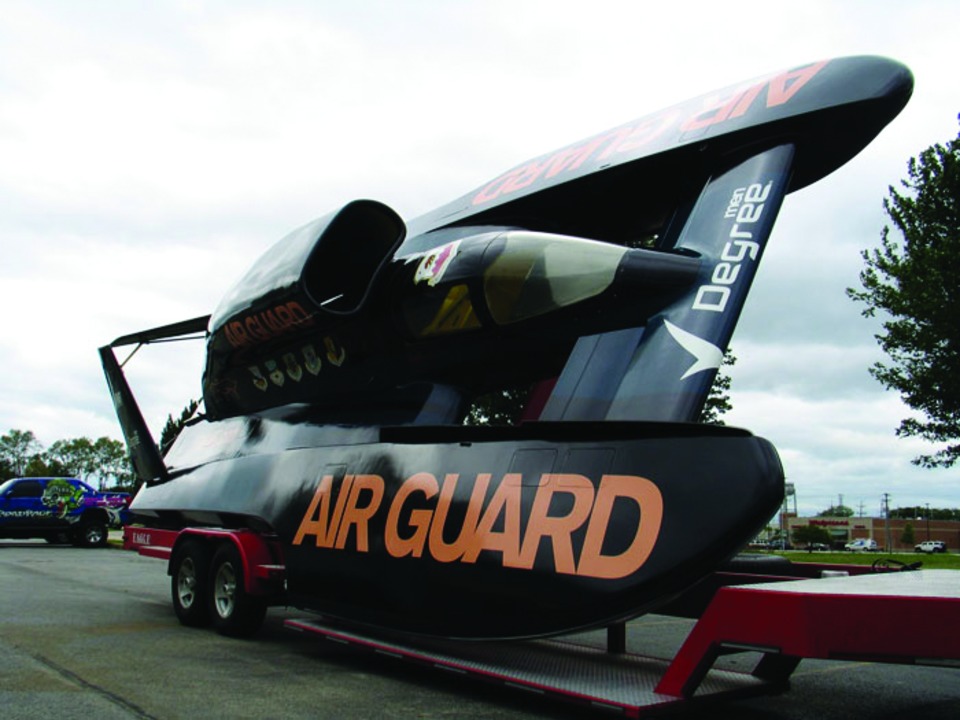
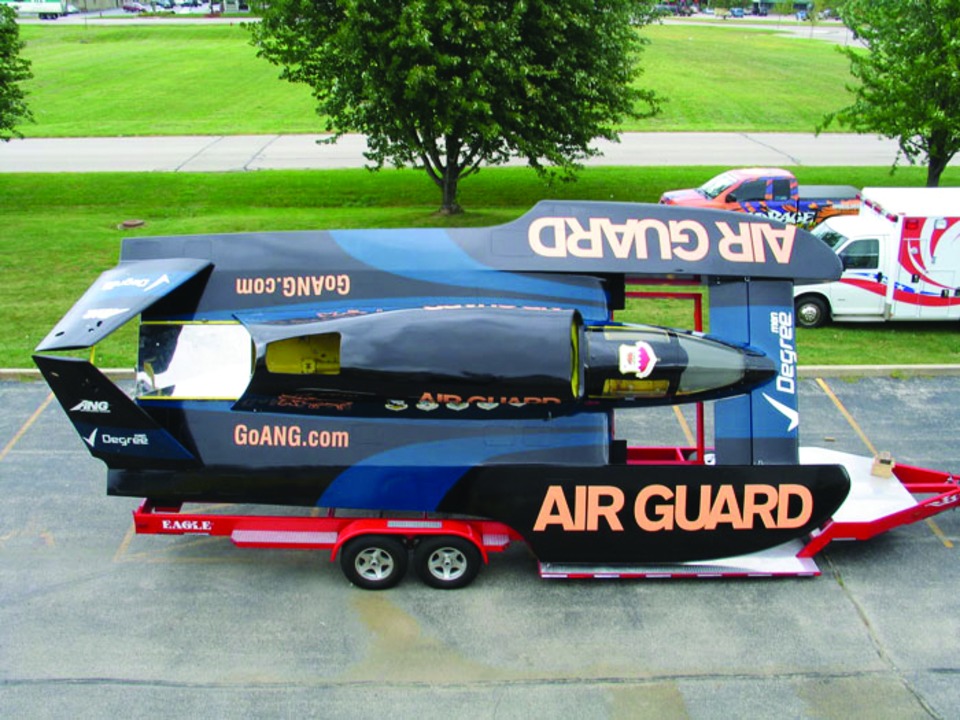
In some areas of the country, another offshoot may be watercraft, said Kris Harris, vice-president and co-owner of Road Rage Designs, a decade-old business that concentrates about 95 percent of its efforts on vehicle graphics. The wrapping of personal boats with names and logos of the companies the boat owners manage is becoming more popular in the Chain O Lakes area, a region northwest of Chicago that is the busiest waterway in the country, Harris said.
Simplifying the Old Routines
Technological improvement continues to make the production and installation of vehicle graphics easier and quicker. According to Denison, materials available to vehicle graphics companies are significantly improved. New adhesives make installation easier, and casts and super-casts that permit films to be stretched and formed over more complicated vehicular surfaces have increased the speeds and effectiveness of the installations. Some of the inks have also improved when contrasted with those used years ago, he said.
“There’s also been an improvement in the tools out to address various aspects of the installation, whether they are magnets, squeegees or rivet tools. Then there’s the RollePro, which allows installation over rivets to be substantially faster, with a much better-looking finished product,” Denison said.
Added Salaverry: “The technology is moving forward at a blistering pace.” But despite the improvements in materials and tools, he says, the production and installation of beautiful vehicle wraps is still a craft. “The learning curve may be less challenging, but your craft really has to be honed,” he said. “The economy has knocked out some of the hangers-on. The guys who are still in business are doing something right in terms of offering a quality product. You may be able to pull it off once [if unskilled], but you‘re not going to pull it off 100 times.”
Avoiding Typical Mistakes
Because of this need for skill and experience, beginners to the world of vehicle wraps can make lots of mistakes, Denison said. When they wander into land mines, it’s typically in the areas of design, material selection or installation.
First, he said, “They don’t understand how to think about effective design and what that means. The designs wind up substantially busy, or substantially simplistic. It’s about a lot more than taking someone’s remanufactured background graphic and simply slapping a logo on it.”
Moreover, many shops aren’t hiring the right kinds of artists to handle the designs, Salaverry said. “When we look for artists, we’re finding a lot of them are really good on computers, but they can’t do the hand drawings,” he said.
Many shops go wrong with material selection. For instance, some will attempt to become more profitable by investing in cheap materials or inexpensive combinations of materials and laminates, Denison said.
In the short term, the graphics look good and profits are maintained. But the strategy runs out of steam later, when the client finds his or her vehicle wrap giving out before the four or five years it should last. “What that does in my view is undermine the industry’s reputation for quality, calling into question the viability of vehicle wraps to provide an image that represents [clients] well,” he said.
Tomlin is another observer who sees too many in the industry going cheap. “The problem with the cheap material is it won’t last,” he said.
“I really see these wraps as investments, and if [clients] are paying two to four thousand you want them to last a good while, three or four years at least, so they get a good return on the investment.”
As for Salaverry, he advises those inclined to use generic materials to wade into those waters very carefully. “Take your time and go through the process, and eventually you’ll find what does and doesn’t work for you,” he said.
The third very common mistake is in failure to install the materials correctly. Installation inexperience can be seen in everything from “paneling” to failures that occur later in the product’s lifespans, Denison said. The materials have to be laid out correctly, and if they aren’t, the graphics aren’t going to be readable at 60 miles per hour. Moreover, failure to lay out materials in the right way may translate to words appearing over a door handle or other vehicle feature where vinyl will have to be cut and removed. These kinds of mistakes can be corrected, but substantially erode profit performance, he adds.
Yet another error made by many beginners to the field, according to Harris, is deliberately pricing themselves too low to be fully profitable.
“Everyone new to the business wants to give a wrap away for nothing,” she said. “Vehicle wraps have value as an advertising medium. And if you have to do warranty work—or even if a panel gets messed up—you’re eating that job. You’re essentially paying them to do the work.”
Words of Wisdom
Surviving years as a provider of vehicle wraps can be an educational experience, and Denison and Salaverry were happy to impart a few closing words of wisdom. “Don’t harm the industry,” Denison urged. “There are a lot of people who want to pay a bottom line game, and be bottom feeders. I’ve seen a lot of them go out of business in the last two or three years.”
Salaverry, noting many believe the greatest innovations in vehicle wraps are already behind us, says don‘t believe it. “There’s so much great stuff yet to come in this field. Innovate, and show respect.”
The Trappings (and Wrappings) of Success
Doing great vehicle wraps is a way to find yourself in the spotlight, as Salaverry, Tomlin and Denison can attest. All have in recent months ridden their proficiency in the field to national exposure few other providers ever capture.
For instance, SkinzWraps teamed with Epson America and Avery to do a wrap of the most expensive car to ever undergo the vehicle wrap treatment. In early November, a $1.7 million Bugati Veyron was on display in Epson’s booth at the Specialty Equipment Market Association (SEMA) in Las Vegas. According to a release, “The custom wrap was designed, printed and applied by SkinzWraps using an Epson Stylus Pro GS6000 printer and Avery 1005 Supercast media.”
It took seven days to produce the design, print the wrap and apply it to the Bugatti, the most costly and fastest sports car in the world.
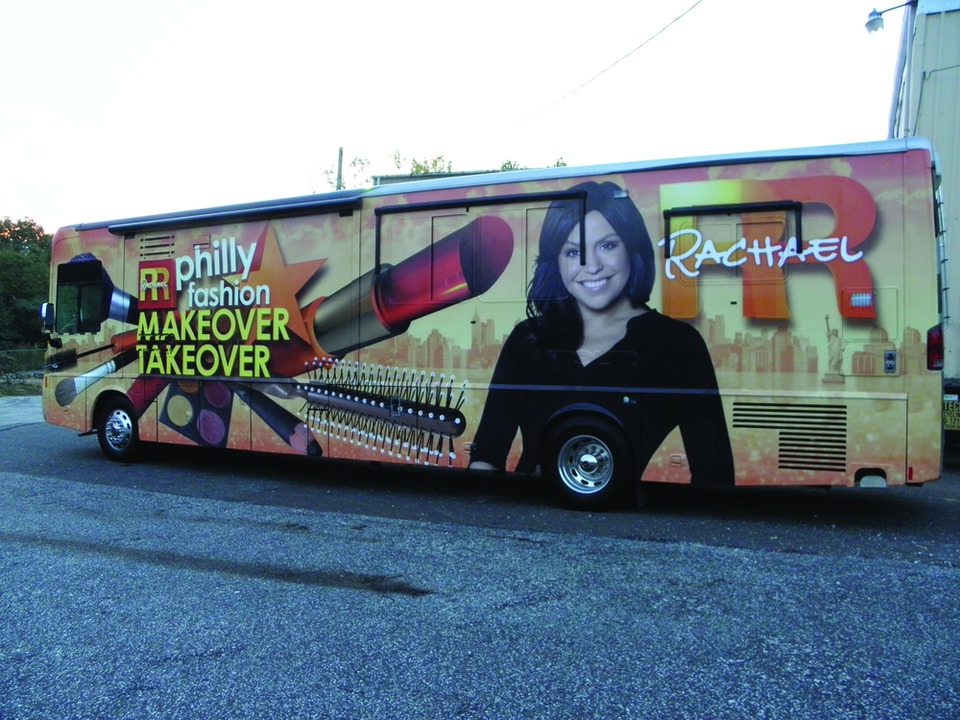
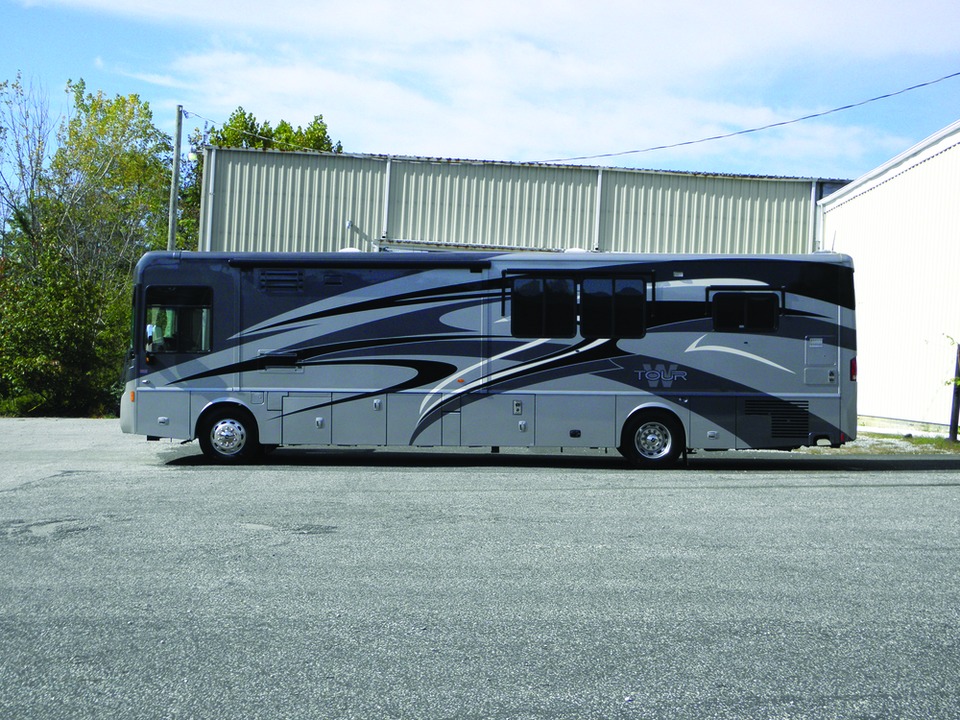
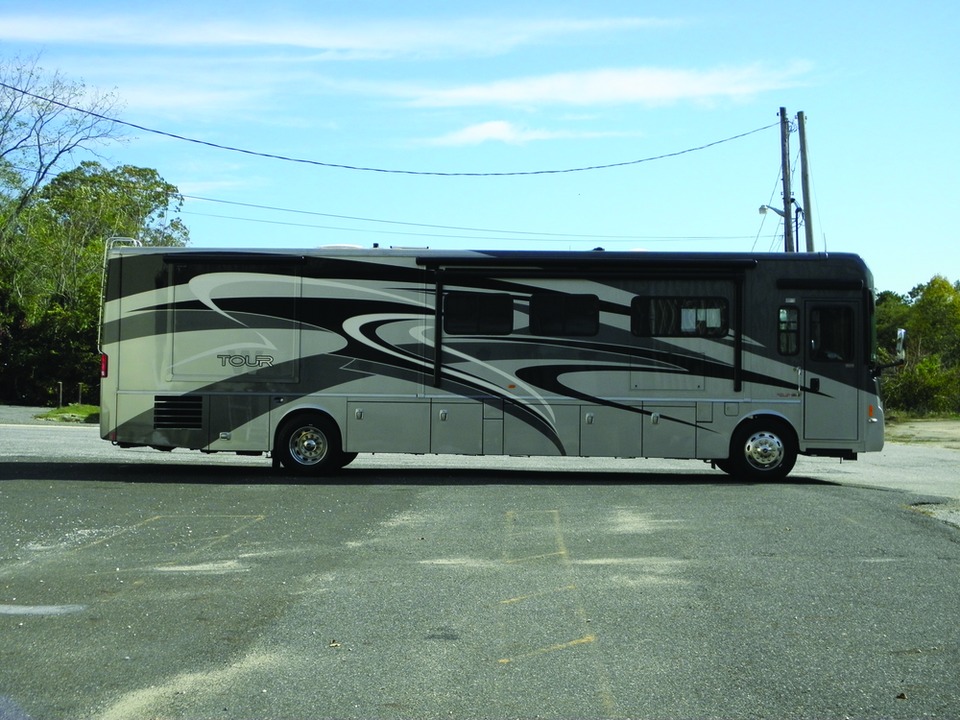
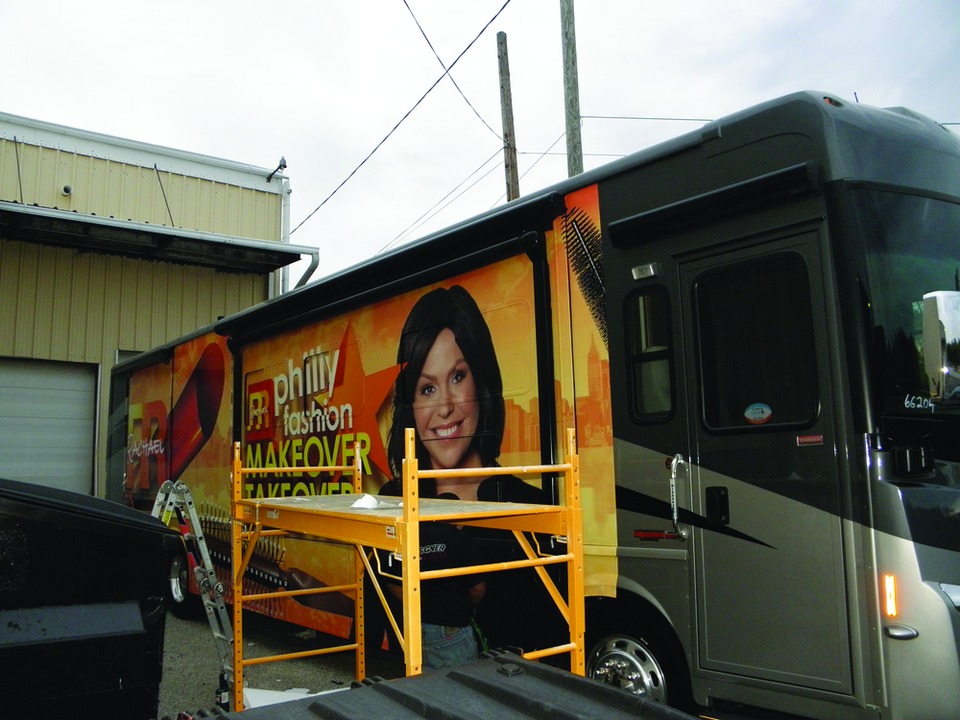
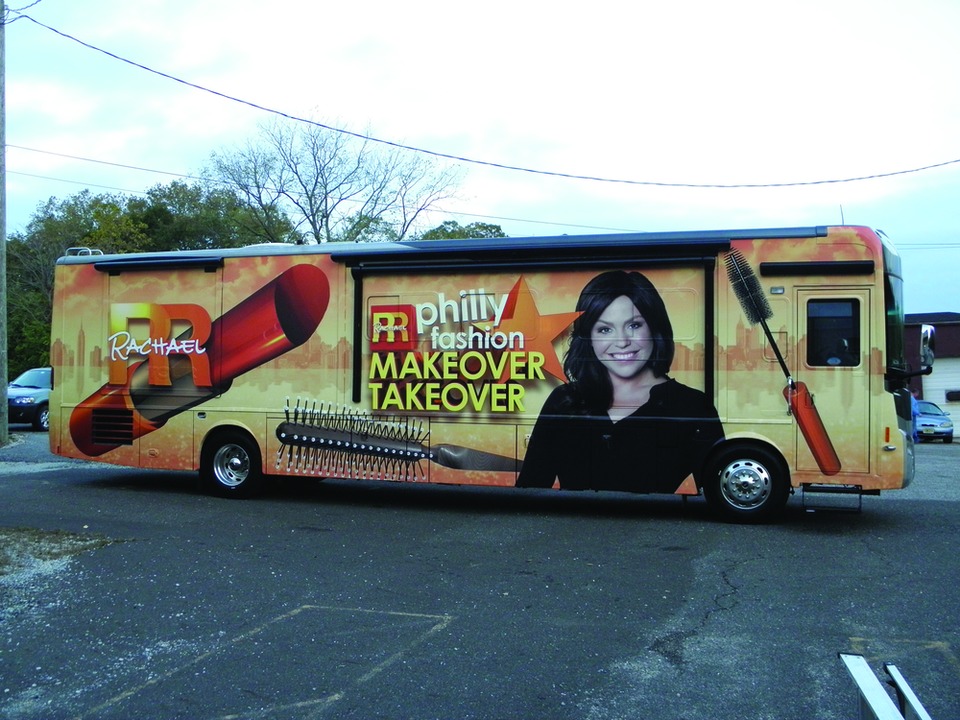
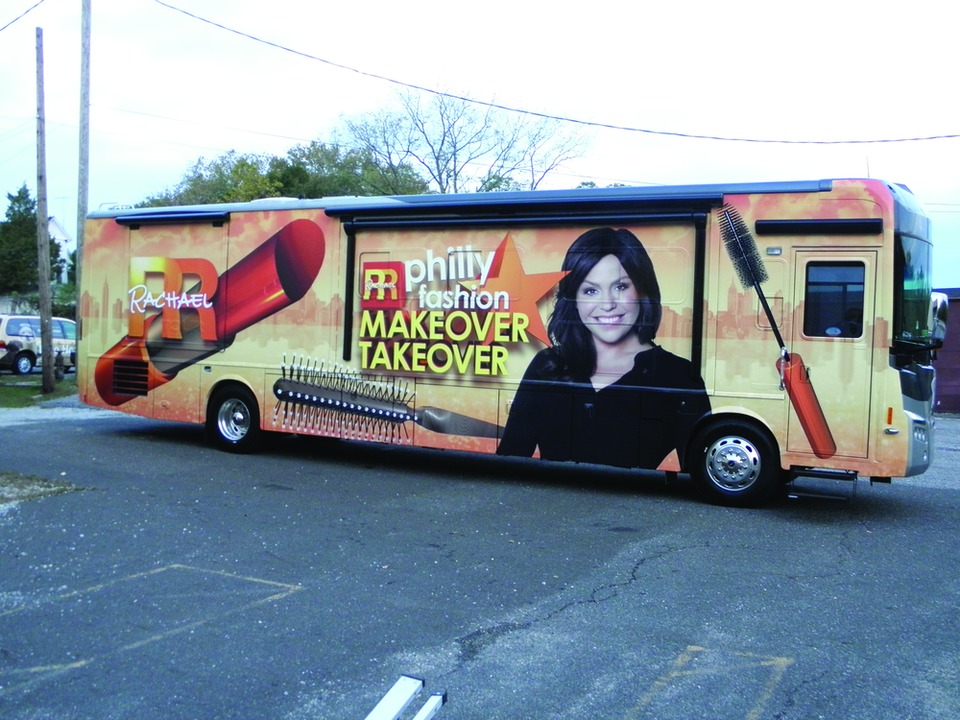
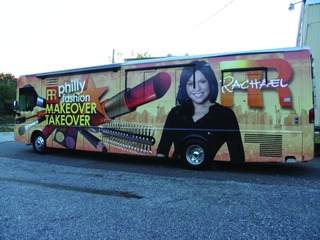
Meantime, Tomlin’s Designer Wraps was called upon to wrap Rachel Ray’s tour bus when it came to Philadelphia for the Rachel Ray Philly Fashion Makeover Takeover show. Tomlin got the call late one Friday afternoon, accepted the offer and had a wrap of the 40-foot recreational vehicle carrying Ray and her team finished by the following Tuesday, the day they needed it.
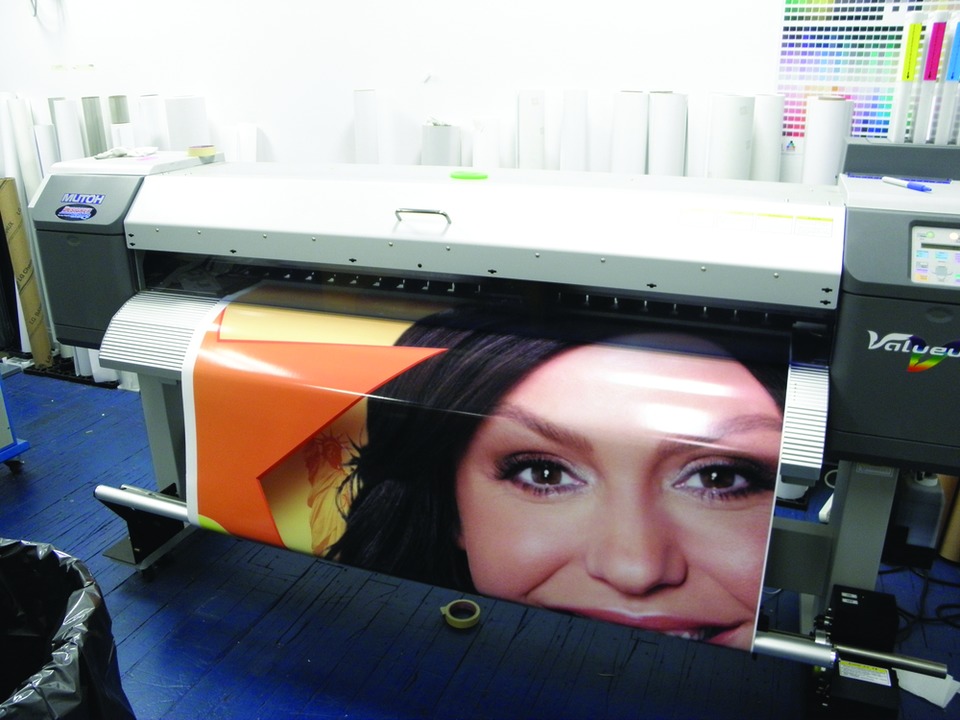
The job was straightforward, calling for a Mutoh ValueJet1614-64 printer, known as “The Wrapper’s Choice” for the industry’s most professional wraps. Designer Wraps produced 10.5 panels per side of the RV. “We had to color in a lot of stuff, including windows, awnings, doors and grates,” Tomlin said.
Not to be outdone, Denison nabbed a prestigious award at the SGIA trade show in Las Vegas, NV last October, when he took the prize in a contest staged by 3M, a leading maker of films for the vehicle graphics industry.
“They had anybody who wanted to put down a section of a rear bumper on a [Chevrolet] HHR,” Denison recalled. “It was a time and quality competition, and I beat out a couple hundred other competitors.”
For more information:
Capital Wraps
directory.myprintresource.com/10210364
Designer Wraps
directory.myprintresource.com/10206577
Road Rage Designs
directory.myprintresource.com/10210367
SkinzWraps
directory.myprintresource.com/10184775
?